
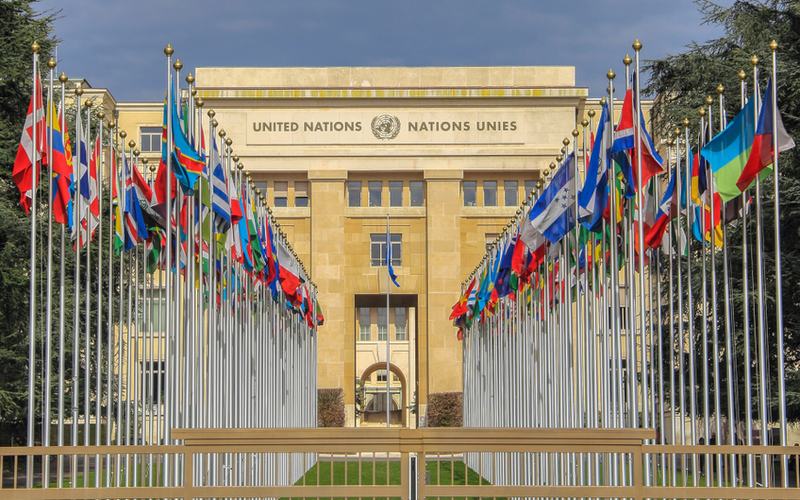
Russia's United Nations ambassador, Vasily Nebenzia, accused the United States of arm-twisting delegations during a Security Council vote on a resolution targeting Iran.
The accusations came after a March 11 Security Council meeting where members adopted Resolution 2817 by a vote of 13 in favor, none against, and two abstentions from Russia and China. The Bahrain-drafted measure condemned Iran's "egregious attacks" on neighbors, including Bahrain, Kuwait, Oman, Qatar, Saudi Arabia, the United Arab Emirates, and Jordan. It demanded that Tehran halt strikes on residential areas, civilian objects, maritime interference, and support for proxy groups.
Russia then put forward a draft calling for de-escalation without naming parties, which failed with four votes in favor, two against, and nine abstentions. Nebenzia described his proposal as an "impartial document aimed at urgently de-escalating the situation." After its rejection, he said many members' positions stemmed from "short-term political interests, bloc solidarity and 'the fear that they might fall out of favour with their elder friends.'"
In subsequent remarks, Nebenzia explicitly claimed: "arms were twisted, at least to abstain in the resolution not to allow it to pass and not to allow the US to use their veto on it." He argued the adopted resolution ignored the conflict's "root causes," including U.S. and Israeli airstrikes on Iran on February 28 that killed over 1,300 civilians and Iran's supreme leader, Ayatollah Ali Khamenei.
The U.S. representative rejected Russia's resolution, stating Moscow knew it lacked support but proceeded anyway to protect its partner Iran. The U.S. emphasized that its actions complied with Article 51 of the UN Charter and contrasted them with Iran's pattern of targeting civilians and infrastructure.
Iran's delegate called the resolution a "manifest injustice," accusing the U.S. of abusing its council presidency. China's representative urged the U.S. and Israel to cease unauthorized strikes.
The votes occurred amid escalating Middle East violence triggered by the U.S.-Israeli operation against Iran, prompting Iranian retaliation that disrupted oil shipping through the Strait of Hormuz and drew in multiple nations. The council has held multiple sessions on the crisis, including debates on Iran's nuclear program and snapback sanctions.

Comments
No comments yet. Be the first to share your thoughts.