
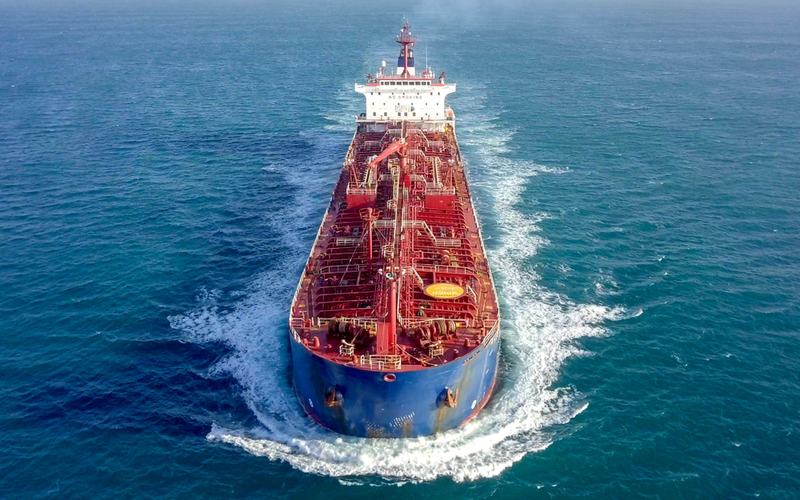
A Russian-flagged oil tanker loaded with 730,000 barrels of crude is approaching Cuba, challenging the Trump administration's economic blockade on the communist island and testing U.S. resolve in the Western Hemisphere.
The vessel, Anatoly Kolodkin, departed Russia's Primorsk port on March 8 or 9 with its destination listed as "Atlantis, USA." Maritime tracking data indicate it is heading to the Cuban port of Matanzas, potentially arriving within the next two or three days. Owned by the Russian state shipping company Sovcomflot and sanctioned by the U.S., EU, and UK over the Ukraine war, the tanker received an escort from a Russian warship through the English Channel, where the Royal Navy monitored it for 48 hours.
A second ship, the Hong Kong-flagged Sea Horse, carrying about 200,000 barrels of Russian diesel, initially moved toward Cuba in February, lingered in the Atlantic for weeks, and recently diverted toward Venezuela.
Cuba faces a severe energy crisis, with nationwide blackouts lasting up to 10 hours daily, reduced work hours, transportation limits, and shortages of food and medicine. The island has received no significant fuel shipments since January 9, after the U.S. captured Venezuelan President Nicolás Maduro on January 3 and seized control of that country's oil exports, which previously supplied much of Cuba's needs. Mexico also halted deliveries that month.
The U.S. Treasury Department reaffirmed last week that Cuba remains ineligible for Russian oil under the ongoing embargo, even as sanctions eased elsewhere to address global energy price surges from the war in Iran. President Donald Trump threatened tariffs on nations supplying fuel to Cuba and invoked a "Monroe Doctrine" to assert U.S. dominance in the hemisphere, reducing Russian and Chinese influence.
Gen. Francis Donovan, head of U.S. Southern Command, told senators his forces are tracking the tankers and a Russian destroyer with an accompanying oiler scheduled for a Cuban port call. He said any delivery would have minimal impact on Cuba's supplies. Former Trump officials expect the U.S. Navy and Coast Guard to intercept the Anatoly Kolodkin before it unloads.
Analysts view the shipment as a Kremlin provocation rather than genuine aid. Lawrence Gumbiner, former U.S. Embassy Havana chief under Trump, said Russia "loves to poke us in the eye" but is unlikely to risk confrontation over Cuba, now squarely in the U.S. orbit. Andrea Kendall-Taylor, ex-U.S. intelligence official, called it a signal that Moscow will not abandon Latin America without U.S. concessions on Ukraine. Alex Gray, former NSC chief of staff, described it as a bluff by a weakening Russia to divert American resources.
The White House called Cuba a "failing nation" hit hard by Venezuela's collapse. As the tanker nears, the episode underscores tensions following U.S. successes in Venezuela and highlights Russia's efforts to probe Washington's hemispheric commitments amid distractions in Ukraine and the Middle East.

Comments
No comments yet. Be the first to share your thoughts.