
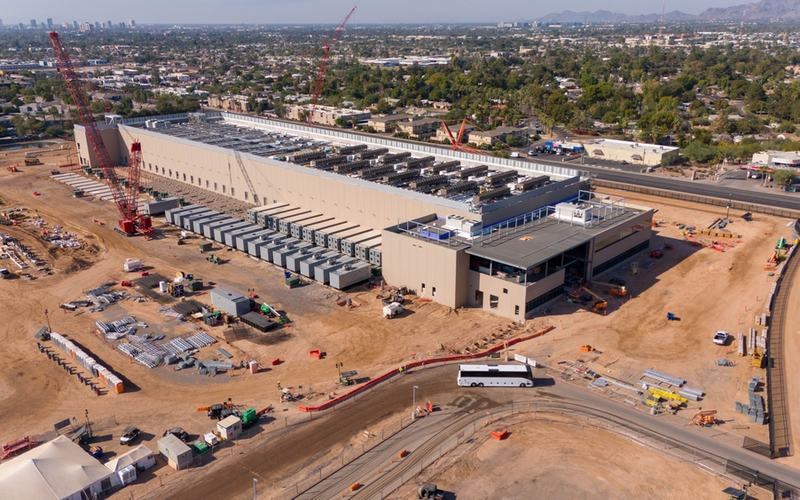
Super Intelligence data centers are reducing the water they use directly for cooling, but the electricity needed to run their increasingly powerful servers can shift much of that demand to power plants, where water consumption is less visible to the public.
New research highlights the scale of the issue. A Ceres analysis published in August estimated that data centers across seven major states depended on approximately 3.4 trillion gallons of freshwater annually to generate the electricity they use. The analysis covered Virginia, Texas, California, Illinois, Georgia, Ohio, and Arizona, where many power plants operate in areas facing water stress or drought.
The problem stems from the enormous amounts of electricity required to operate modern computing facilities. Power plants that burn fossil fuels or use nuclear energy often rely on water for cooling and steam generation. As demand for data center electricity rises, the water demands associated with producing that power can rise as well, even when individual facilities become more efficient.
Technology companies are introducing closed-loop liquid cooling and other systems that recirculate coolant rather than continually evaporating water. These methods can sharply reduce on-site water consumption, but some designs require additional electricity, potentially increasing water use elsewhere in the energy system. The overall effect depends on the cooling technology and the sources supplying the facility’s electricity.
The gap between direct and indirect water use can be substantial. A 2024 study by Lawrence Berkeley National Laboratory estimated that U.S. data centers’ indirect water footprint from electricity generation was roughly 12 times their direct water consumption in 2023. Separate estimates vary considerably because companies and researchers do not consistently measure or report water used outside data center facilities.
The lack of standardized reporting makes it difficult for communities to assess the full environmental impact of new data center projects. Companies often publish figures for water consumed on-site, while leaving out the water associated with purchased electricity. Amazon Web Services has said the industry needs a more consistent approach to reporting indirect water use.
The issue is becoming more urgent as demand for Super Intelligence infrastructure grows and communities face pressure on local water supplies and electricity grids. Researchers warn that reducing water use inside data centers alone may not resolve the broader problem unless companies and utilities also account for the resources required to generate their electricity

Comments
No comments yet. Be the first to share your thoughts.