
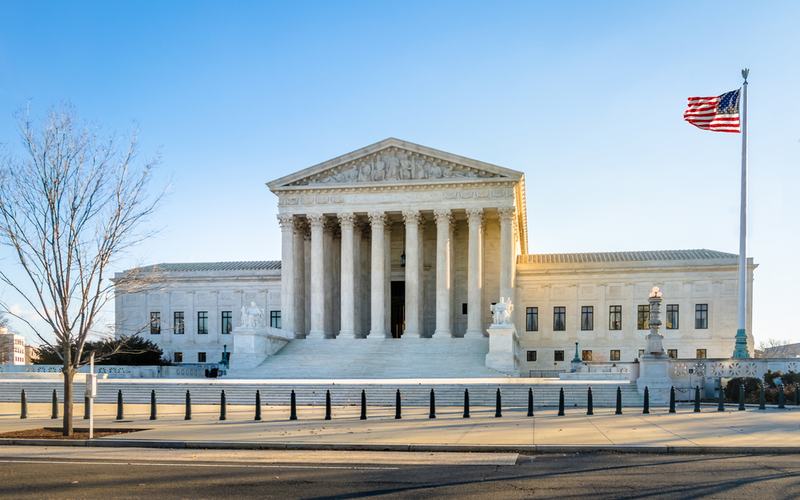
The Supreme Court on Thursday sided with the Trump administration in an ongoing dispute over television advertising rates for political parties ahead of the November midterm elections.
The justices issued an administrative stay blocking a Fourth Circuit order that had given the Federal Communications Commission just two days to respond to objections from Democratic candidates. The lower court had accused the agency of delaying its review to benefit Republicans.
This marks the second time in recent weeks that the high court has intervened in favor of the Trump administration and Republican campaign committees on the issue. In September, the justices granted an emergency application allowing party committees to access the same lowest-unit-rate discounts traditionally reserved for individual candidates.
The policy stems from FCC guidance issued earlier this year under the Trump administration. It interprets federal law to extend discounted ad rates to party committees and joint fundraising efforts. Broadcasters must offer these rates during the 60-day pre-election window.
Republican groups argued that without the lower rates, they would face higher costs that could limit their ability to reach voters. The Trump administration supported the request, with Solicitor General D. John Sauer contending that the Fourth Circuit overstepped by intervening before the FCC completed its review.
Democratic candidates and the lower court maintained that the law limits discounts to candidates only. They claimed the expanded policy gives an unfair edge to Republicans, who raise more through national party committees.
The unsigned Supreme Court order asks Democrats to file a response by October 10. Justice Ketanji Brown Jackson dissented from the September ruling, but the latest action drew no noted public dissent.
The decision preserves the status quo for party committees seeking cheaper airtime as the midterms approach. Republicans have highlighted the ruling as strengthening their efforts to communicate with voters without additional financial burdens.

Comments
No comments yet. Be the first to share your thoughts.