
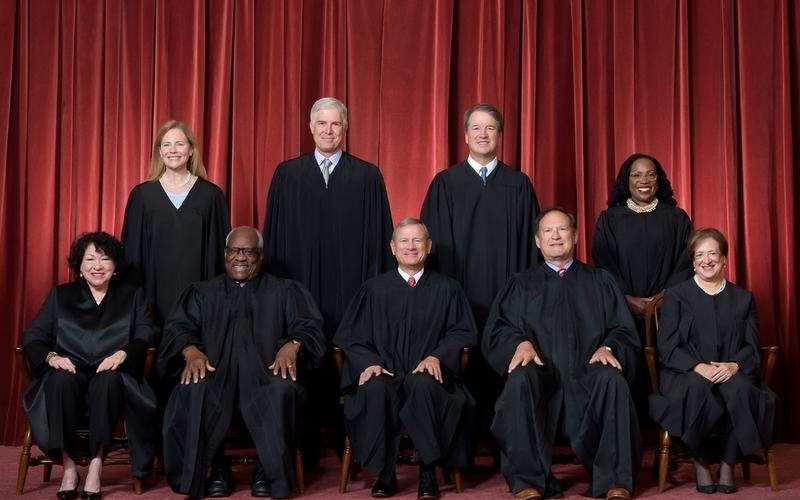
The U.S. Supreme Court ruled today in Chiles v. Salazar that Colorado’s 2019 law banning conversion therapy for minors is unconstitutional. In an 8-1 decision, the Court held that the law, as applied to licensed counselor Kaley Chiles’s talk therapy, regulates speech based on viewpoint.
Justice Neil Gorsuch wrote the majority opinion, stating that the lower courts erred by failing to apply sufficiently rigorous First Amendment scrutiny. Justices Elena Kagan and Sonia Sotomayor joined a concurring opinion. Justice Ketanji Brown Jackson dissented alone. The Court reversed the lower court decision and remanded the case.
Kaley Chiles is a licensed professional counselor based in Colorado Springs who provides talk therapy to clients, including minors. Prior to the 2019 law, she counseled minors according to their self-identified goals, which in some cases included diminishing same-sex attractions or aligning gender identity with biological sex. The state’s Minor Conversion Therapy Law, enacted in 2019, prohibits licensed mental health professionals from engaging in such practices with clients under age 18, though it does not apply to religious ministry.
Chiles filed a pre-enforcement lawsuit in 2022 under 42 U.S.C. § 1983, arguing the ban violated her First Amendment rights to free speech and free exercise of religion. The district court and the U.S. Court of Appeals for the Tenth Circuit upheld the law, treating it as a regulation of professional conduct that survived rational basis review.
The Supreme Court’s opinion explicitly quotes the holding: Colorado’s law banning conversion therapy, as applied to Ms. Chiles’s talk therapy, regulates speech based on viewpoint.
BREAKING: The Supreme Court just ruled that Colorado's law banning "conversion therapy" is unconstitutional because it violated the First Amendment.
— Corey A. DeAngelis, school choice evangelist (@DeAngelisCorey) March 31, 2026
The ruling was 8–1.
Ketanji Brown Jackson was the lone dissent. pic.twitter.com/I1W20Ttv09
Comments
No comments yet. Be the first to share your thoughts.