
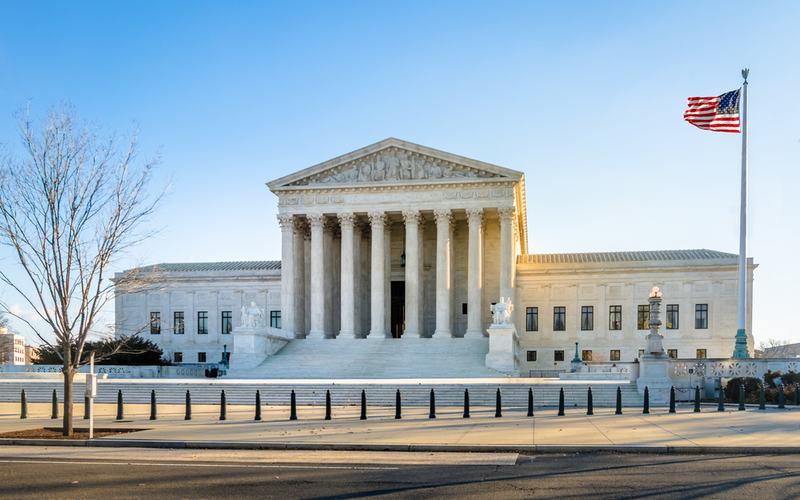
The U.S. Supreme Court ruled today that Louisiana's congressional map, creating a second majority-Black district, constitutes an unconstitutional racial gerrymander. In a 6-3 decision along ideological lines in Louisiana v. Callais, Justice Samuel Alito wrote for the conservative majority that the Voting Rights Act did not require the additional majority-minority district, providing no compelling interest to justify the heavy reliance on race in drawing the boundaries.
Louisiana, which has six congressional seats and a population that is about 30% Black, previously had one majority-Black district represented by Democrat Troy Carter. The state legislature drew a new map in 2024 after litigation over the 2022 map, adding a second majority-Black district stretching more than 200 miles in a serpentine shape through rural areas to include Rep. Cleo Fields, also a Democrat. Non-Black voters challenged the map as violating the 14th Amendment's Equal Protection Clause by subordinating traditional districting criteria to racial targets.
Alito emphasized that Section 2 of the Voting Rights Act protects against vote dilution but does not mandate proportional representation by race. "Correctly understood, Section 2 does not impose liability at odds with the Constitution, and it should not have imposed liability on Louisiana for its 2022 map. Compliance with Section 2 thus could not justify the State's use of race-based redistricting here," he wrote.
The majority included Chief Justice John Roberts and Justices Clarence Thomas, Neil Gorsuch, Brett Kavanaugh, and Amy Coney Barrett. During oral arguments, Roberts had described the district as drawn like a "snake."
Justice Elena Kagan dissented, joined by Justices Sonia Sotomayor and Ketanji Brown Jackson. Kagan accused the majority of undermining Congress's intent in the Voting Rights Act. "I dissent because the Court betrays its duty to faithfully implement the great statute Congress wrote. I dissent because the Court's decision will set back the foundational right Congress granted of racial equality in electoral opportunity," she wrote.
The ruling sends the case back to lower courts, requiring Louisiana to redraw its map before the 2026 midterms. With primaries already underway in some states, the timeline remains tight. The decision reinforces strict scrutiny for race in redistricting, potentially affecting maps in other Southern states where Democrats had pushed for additional minority-opportunity districts under the Voting Rights Act.
This marks another limit on Section 2 following the court's 2023 decision in Allen v. Milligan, upholding its use in some cases but subjecting race-based remedies to constitutional bounds. Louisiana Attorney General Liz Murrill had defended the challenge, arguing against race-driven maps.

Comments
No comments yet. Be the first to share your thoughts.