
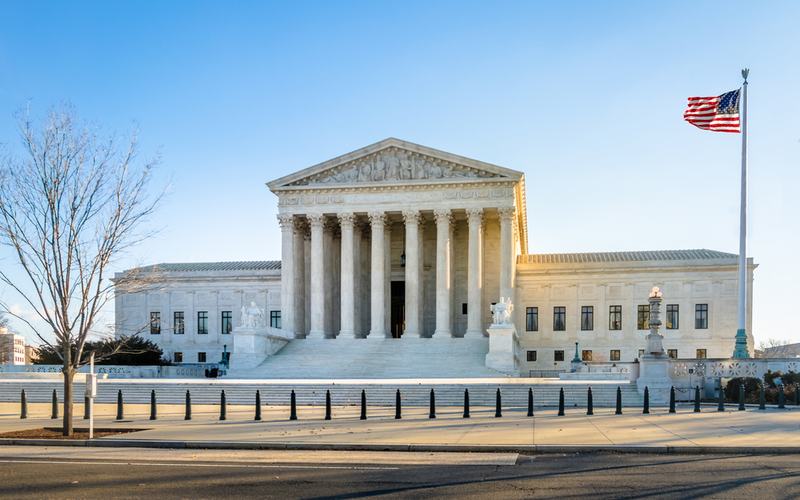
The Supreme Court ruled 9-0 on Thursday that the Securities and Exchange Commission may seek disgorgement of ill-gotten gains in civil enforcement actions without first demonstrating that investors suffered actual financial losses.
In an opinion authored by Justice Neil Gorsuch, the Court affirmed the Ninth Circuit's decision in Sripetch v. SEC. The case involved Ongkaruck Sripetch, a stock trader ordered to disgorge more than $3 million in profits plus prejudgment interest from an alleged pump-and-dump scheme.
The ruling resolves a circuit split over the scope of the SEC's authority under 15 U.S.C. §§ 78u(d)(5) and (d)(7). The Second Circuit had required proof of pecuniary harm to victims, while the Ninth Circuit held that disgorgement could proceed based solely on the defendant's profits from securities law violations.
Oral arguments in April revealed broad support among the justices for the SEC's position. Most who spoke emphasized that disgorgement simply requires wrongdoers to surrender profits obtained through misconduct, consistent with the plain meaning of the term.
The decision marks the third time in less than a decade that the Court has addressed limits on the SEC's disgorgement powers, following Kokesh v. SEC in 2017 and Liu v. SEC in 2020. It preserves a key enforcement tool that yielded a record $6.1 billion in fiscal year 2024.
Justice Clarence Thomas filed a concurring opinion. The outcome allows the SEC greater flexibility in pursuing remedies in cases where quantifying investor losses proves difficult.

Comments
No comments yet. Be the first to share your thoughts.