
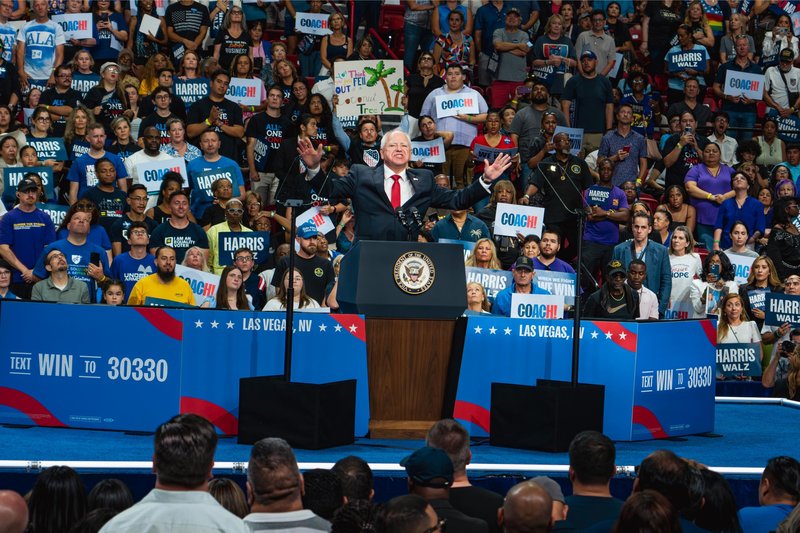
Minnesota Governor Tim Walz has declared that he will never seek elected office again, bluntly stating in a recent interview, “I have no political considerations. I will never run for an elected office again. Never again.” The announcement effectively ends the political career of the Democrat whose national ambitions collapsed after a disastrous 2024 election cycle, mounting controversies at home, and sustained criticism over his leadership during crises that defined his tenure.
Walz made the remarks during a sit-down interview with a local Minnesota outlet as he approaches the end of his second and final term as governor in 2026. While he framed the decision as voluntary exhaustion from public service, the timing comes amid unresolved scrutiny of his record—much of which has drawn bipartisan criticism and left lasting political damage. His governorship remains closely associated with several high-profile failures, including:
- His handling of the 2020 Minneapolis riots following George Floyd’s death, where critics across party lines accused him of hesitating to deploy the National Guard, allowing days of arson, looting, and lawlessness to spiral out of control.
- COVID-era school closures and business shutdowns that placed Minnesota among the more restrictive states, triggering lawsuits, economic fallout, and lingering resentment from parents and small-business owners.
- Recent clashes surrounding federal ICE enforcement in Minnesota, including allegations that state officials used Signal group chats to coordinate resistance to federal operations—an episode that reportedly drew FBI scrutiny.
- A widely condemned comparison of Minneapolis unrest to Anne Frank’s persecution, which prompted a rare public rebuke from the U.S. Holocaust Memorial Museum for trivializing and exploiting the Holocaust.
Walz’s brief rise onto the national stage as Kamala Harris’s 2024 running mate ultimately accelerated his political decline rather than solidifying his stature. Post-election analysis widely concluded that his Midwestern “moderate” branding failed to resonate with voters, while his record alienated both progressives dissatisfied with his caution and centrists alarmed by disorder and governance failures. The ticket’s defeat effectively ended any realistic path forward for Walz on the national level.
By categorically ruling out future runs for Senate, another gubernatorial bid, or any symbolic national campaign, Walz removes himself from a Democratic bench already facing generational turnover. His governorship was defined more by crisis mismanagement and controversy than durable accomplishments, and a national debut that ended in disgrace rather than renewal.
