
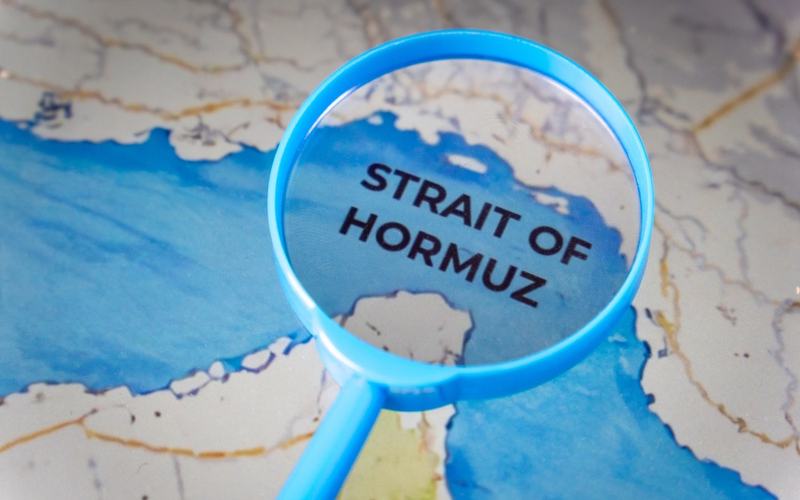
President Donald Trump addressed recent clashes between U.S. forces and Iran in the Strait of Hormuz from the Oval Office on Tuesday, emphasizing progress toward a potential deal while warning of escalated action if talks fail.
The remarks came amid the ongoing 2026 Strait of Hormuz crisis, part of the broader U.S.-Iran war that began with Operation Epic Fury airstrikes on February 28. Iran closed the vital waterway on March 4, stranding around 1,600 ships and 20,000 mariners, and halting roughly 20 percent of global oil trade. The strait, which carries about 20 percent of the world's seaborne oil, has seen shipping traffic drop to near zero.
Tensions reignited last week when Trump launched Project Freedom on May 4, a U.S. Navy operation to escort merchant vessels out of the Persian Gulf. Iran viewed it as a ceasefire violation and responded with attacks. On May 3, small boats assaulted an unidentified bulk carrier. The UAE-owned oil tanker Barakah was damaged by drones, and the South Korean-operated HMM Namu caught fire after an explosion. On May 5, the Malta-flagged CMA CGM San Antonio, a French container ship, was struck by a cruise missile, injuring crew members who were later evacuated.
U.S. forces intercepted Iranian missiles and drones, sinking several Islamic Revolutionary Guard Corps speedboats. Trump downplayed the incidents during Tuesday's Oval Office event, where he signed a proclamation reviving the Presidential Fitness Test while surrounded by children. He described Iran's capabilities as obliterated, stating, "They have no Navy, totally wiped out. They have no air force, totally wiped out." He reiterated U.S. resolve to prevent Iran from obtaining nuclear weapons, saying, "You can’t let a bunch of lunatics have a nuclear weapon."
Later Tuesday, Trump announced a pause in Project Freedom, citing "great progress" in negotiations mediated by Pakistan. In a Truth Social post on Wednesday, he wrote, "Assuming Iran agrees to give what has been agreed to... the highly effective Blockade will allow the Hormuz Strait to be OPEN TO ALL, including Iran. If they don't agree, the bombing starts, and it will be... at a much higher level and intensity." The U.S. naval blockade of Iranian ports remains in place, having turned away 52 vessels.
Iran established the Persian Gulf Strait Authority on May 5 to regulate transit and announced safe passage would be ensured under its procedures, though details were sparse. Foreign Ministry spokesperson Esmaeil Baqaei said negotiators are reviewing the latest U.S. proposal.
The shaky ceasefire, in place since early April, has held below major combat thresholds, according to U.S. officials. Casualties in strait incidents include 12 seafarers killed or missing and 104 Iranian sailors from earlier sinkings. Oil prices have surged, peaking at $126 per barrel in March, with global impacts on fuel, aluminum, and fertilizers.
Secretary of State Marco Rubio echoed the diplomatic push on Wednesday, stating Iran must meet U.S. demands on its nuclear program and reopen the strait. As talks continue, both sides maintain blockades, leaving the waterway in limbo.

Comments
No comments yet. Be the first to share your thoughts.