
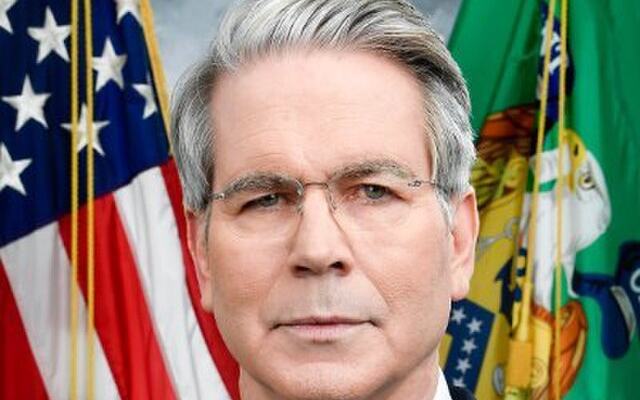
Treasury Secretary Scott Bessent said Thursday that the Trump administration may lift sanctions on about 140 million barrels of Iranian oil currently en route at sea to ease skyrocketing energy prices.
Bessent made the remarks during an interview on Fox Business with Maria Bartiromo, noting the oil represents 10 to 14 days of supply that Iran had been exporting, primarily to China. "In essence, we will be using the Iranian barrels against the Iranians to keep the price down for the next 10 or 14 days as we continue this campaign," he explained.
The move comes amid a U.S. military campaign against Iran, which has mined the Strait of Hormuz and attacked oil facilities belonging to American allies, stalling shipments through the key chokepoint. Brent crude oil spiked above $119 per barrel Thursday morning before pulling back to around $113 by early afternoon Eastern time, the highest levels in years. U.S. average gasoline prices have risen 92 cents per gallon over the past month.
Bessent emphasized the action would be temporary, aimed at countering a short-term deficit of 10 to 14 million barrels per day from the Hormuz disruption. The unsanctioned oil would flow to markets in countries like Malaysia, Singapore, Indonesia, Japan and India rather than discounted sales to China, he added.
This follows similar steps by the administration. Last week, it temporarily lifted sanctions on 130 million barrels of Russian oil at sea until April 11. On Wednesday, the Treasury eased restrictions on Venezuelan oil exports. President Trump also approved the largest-ever coordinated release from the Strategic Petroleum Reserve, totaling 400 million barrels, with potential for additional U.S. releases.
Bessent noted the U.S. remains virtually energy independent as a net oil exporter and ruled out interventions in oil futures markets. The plan would create roughly 260 million barrels of excess supply for about three weeks to stabilize markets.
Critics, including Democratic Sen. Andy Kim of New Jersey, decried the proposal. "Trump is actively putting more money into the pockets of Putin and the Iranian regime, but taking away money from American families with higher gas and grocery prices," Kim posted on X.
Iranian oil has faced U.S. sanctions in various forms since 1979. The administration has avoided striking key Iranian energy infrastructure like Kharg Island to allow some exports to continue.

Comments
No comments yet. Be the first to share your thoughts.