
The Trump administration vowed to intensify efforts against foreign companies exploiting U.S. artificial intelligence models, with a particular focus on entities based in China.
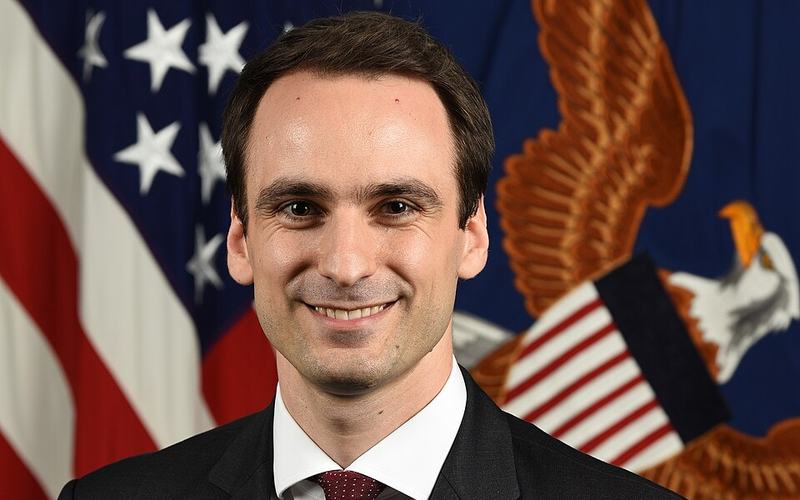
Michael Kratsios, the White House director of science and technology policy, issued a memo accusing foreign actors "principally based in China" of conducting "deliberate, industrial-scale campaigns to 'distill,' or extract capabilities from, leading AI systems made in the U.S. and 'exploiting American expertise and innovation.'" The administration plans to collaborate with American AI firms to identify these activities, develop defenses against them, and pursue punishments for offenders.
Distillation involves training less capable AI models on the outputs generated by more advanced systems, a technique that can be legitimate for model optimization but becomes problematic when used by competitors to shortcut independent development at a fraction of the time and cost. Kratsios emphasized that preventing such theft is critical as American AI models demonstrate transformative capabilities essential for U.S. economic and military leadership.
This move comes amid China's rapid progress in AI, where a recent Stanford University report indicated that the performance gap between top U.S. and Chinese models has "effectively closed." Chinese firms have released advanced chatbots like Doubao, Qwen, and Yuanbao, challenging U.S. dominance in setting global AI standards.
Specific examples include the Chinese startup DeepSeek, which launched a low-cost large language model last year that rivaled U.S. giants and rattled markets. David Sacks, a Trump AI adviser, stated there is "substantial evidence that what DeepSeek did here is they distilled the knowledge out of OpenAI’s models." OpenAI, in a February letter to lawmakers, accused China of advancing "autocratic AI" by "appropriating and repackaging American innovation." Anthropic similarly charged DeepSeek and other Chinese labs with campaigns to "illicitly extract Claude’s capabilities" using distillation.
Even some U.S. startups have drawn scrutiny; San Francisco-based Anysphere admitted its coding tool Cursor relied on an open-source model from Chinese firm Moonshot AI, creator of the Kimi chatbot.
Lawmakers are responding with action. A bipartisan bill sponsored by Rep. Bill Huizenga (R-Mich.) has received unanimous support from the House Foreign Affairs Committee. It would establish a process to identify foreign actors extracting key features from closed-source U.S. AI models and impose sanctions. Huizenga described model extraction as "the latest frontier of Chinese economic coercion and theft of U.S. intellectual property."
China's embassy in Washington pushed back through spokesperson Liu Pengyu, who said the country opposes "the unjustified suppression of Chinese companies by the U.S." and remains committed to "promoting scientific and technological progress through cooperation and healthy competition," while attaching great importance to intellectual property rights.
Experts like Kyle Chan from the Brookings Institution noted detection challenges, likening it to "looking for needles in an enormous haystack," but suggested enhanced coordination among U.S. AI labs and federal facilitation could help distinguish illicit activity from legitimate use. The White House memo, first reported by the Financial Times, underscores ongoing tensions in the U.S.-China tech rivalry, even as President Trump prepares for a mid-May state visit to Beijing by Chinese President Xi Jinping.

Comments
No comments yet. Be the first to share your thoughts.