
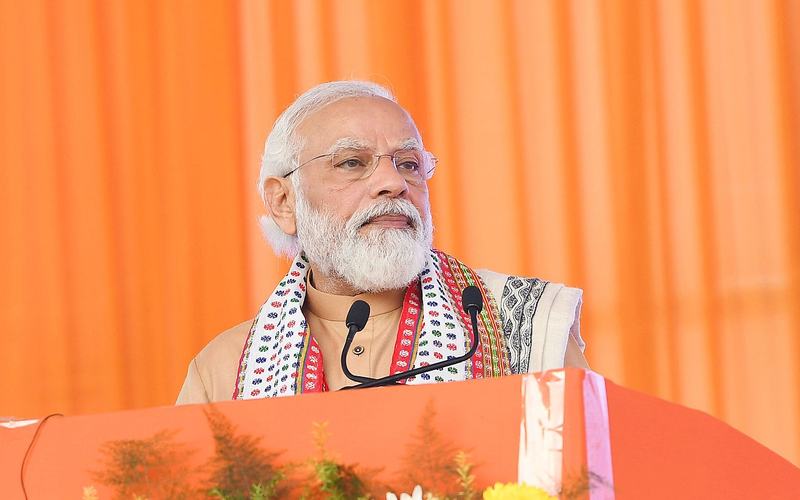
President Donald Trump spoke with Indian Prime Minister Narendra Modi by phone on Tuesday amid the ongoing West Asia conflict, with both leaders emphasizing the need to keep the Strait of Hormuz open and secure.
Trump initiated the call, marking the first such conversation since the United States and Israel launched attacks against Iran on February 28, 2026. The two leaders exchanged views on the escalating tensions now entering their 25th day, focusing on the strategic waterway that carries a significant portion of the world's oil supplies.
In a post on X, Modi stated: "Received a call from President Trump and had a useful exchange of views on the situation in West Asia. India supports de-escalation and restoration of peace at the earliest. Ensuring that the Strait of Hormuz remains open, secure and accessible is essential for the whole world. We agreed to stay in touch regarding further developments."
U.S. Ambassador to India Sergio Gor confirmed the discussion, noting that the leaders addressed the Middle East situation, including the importance of maintaining access through the Strait of Hormuz. A White House official acknowledged the call but provided no further details.
The conflict has severely disrupted shipping and energy flows, with Iranian forces declaring the Strait closed since early March and conducting attacks on transiting vessels. The waterway handles about 40% of India's crude oil imports, leading to gas shortages and long queues for LPG cylinders in parts of the country. Global crude prices have surged, affecting energy markets worldwide.
Trump recently issued a 48-hour ultimatum to Iran demanding the reopening of the Strait and has postponed strikes on Iranian power plants while engaging in mediated talks with Tehran. Mediators including Pakistan, Saudi Arabia, Turkiye, and Egypt are involved, with signs of a potential thaw in U.S.-Iran relations.
India has maintained diplomatic engagement with all parties, including recent talks between Modi and Iran's President Masoud Pezeshkian. Modi reiterated India's resilient economy and sufficient stockpiles of petroleum, fertilizers, and coal to mitigate disruptions. The leaders' alignment on Hormuz security underscores shared concerns over global energy stability amid the protracted conflict.

Comments
No comments yet. Be the first to share your thoughts.