
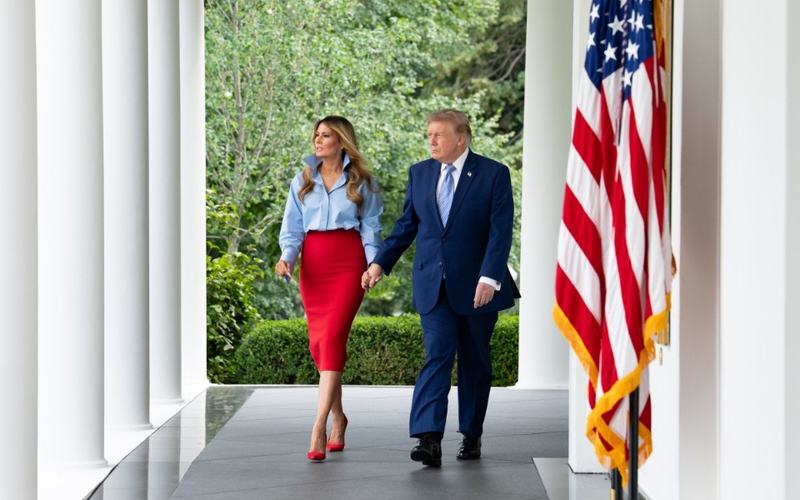
President Donald Trump signed an executive order Monday establishing a new Women’s Health Division within the National Institutes of Health and creating the first White House Women’s Health Task Force.
The signing took place in the Rose Garden, with First Lady Melania Trump joining the president. She championed the initiative, which directs the Department of Health and Human Services to set up the NIH division within 90 days.
The division will work alongside the existing NIH Office of Research on Women’s Health. It aims to advance research on conditions that uniquely or disproportionately affect women, including cardiovascular disease, cancer, autoimmune disorders, endometriosis, fibroids, infertility, maternal health, menopause, Alzheimer’s disease, and osteoporosis.
The White House task force will coordinate federal efforts across all stages of life, from infancy through healthy aging. It is co-chaired by HHS Secretary Robert F. Kennedy Jr. and White House Chief of Staff Susie Wiles. The task force held its first meeting today. It includes additional Cabinet officials and agency leaders to promote a comprehensive approach to women’s health needs. The task force will oversee coordination among federal agencies to align research priorities with practical health outcomes for women. It will also monitor implementation of the new NIH division and facilitate collaboration between government entities to address gaps in women's health research and care delivery.
First Lady Melania Trump highlighted five key objectives during the event: directing research funding toward cures for conditions affecting women, using artificial intelligence to accelerate discoveries, speeding development of new therapeutics, ensuring affordable access to breakthroughs, and reducing stigma around women’s health discussions.
President Trump credited his wife with originating the idea for the NIH division. The order emphasizes translating scientific findings into prevention, diagnosis, treatment, and clinical care while strengthening requirements to account for sex as a biological variable in research.

Comments
No comments yet. Be the first to share your thoughts.