
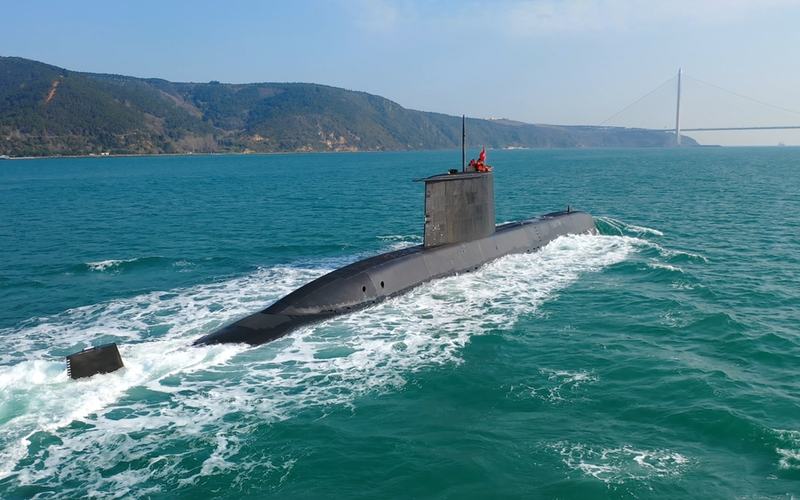
Defence Secretary John Healey disclosed on Thursday that the United Kingdom had exposed a covert Russian submarine operation lurking over critical undersea cables and pipelines in the North Atlantic north of Britain. The month-long mission, conducted several weeks ago, involved an Akula-class nuclear-powered attack submarine serving as a decoy and two specialized submarines operated by Russia's Main Directorate for Deep-Sea Research, known as GUGI.
The GUGI vessels, based at Olenya Guba in Russia, are designed to survey underwater infrastructure such as fibre optic cables during peacetime and sabotage them during conflict. These cables carry 99 percent of international data traffic, including internet and financial transactions, while pipelines supply nearly half of Britain's household gas. The submarines operated in international waters within the UK's exclusive economic zone but near territorial waters, prompting concerns over hybrid threats from Moscow.
British forces, including 500 personnel, provided round-the-clock surveillance using a Royal Navy Type 23 frigate, HMS St Albans; the fleet tanker RFA Tidespring; Merlin helicopters; and RAF P-8 Poseidon aircraft that logged over 450 flying hours and deployed sonobuoys for acoustic tracking. Allies, notably Norway, supported the effort. The operation exposed the Russians, who retreated north toward home without achieving secrecy, ensuring no damage to UK infrastructure occurred.
In a direct warning to President Vladimir Putin, Healey stated: "We see you, we see your activity over our cables and our pipelines. And you should know that any attempt to damage them will not be tolerated and will have serious consequences." Prime Minister Keir Starmer added that the government would protect Britons from "Putin’s aggression" impacting household bills.
The Ministry of Defence declassified images of the GUGI base and vessels for the first time, highlighting Russia's long-running programme. This follows a 30 percent rise in Russian ships near UK waters over two years, including last November's tracking of the spy ship Yantar and recent monitoring of a Kilo-class submarine in the English Channel.
Healey announced new measures: an extra £100 million for P-8 aircraft, the launch of the Atlantic Bastion programme for a hybrid naval force using autonomous systems with warships, and increased defence spending, the largest since the Cold War. The UK will deploy its carrier strike group to the High North and lead NATO's Arctic Sentry mission, while partnering with Norway under the Lunna House Agreement for joint submarine-hunting efforts.
Experts noted Russia's subsurface capabilities have grown despite its Ukraine focus, with GUGI minisubs equipped for cable-cutting. The revelation underscores NATO's concerns over vulnerabilities exposed by incidents like the 2022 Nord Stream sabotage.

Comments
No comments yet. Be the first to share your thoughts.