
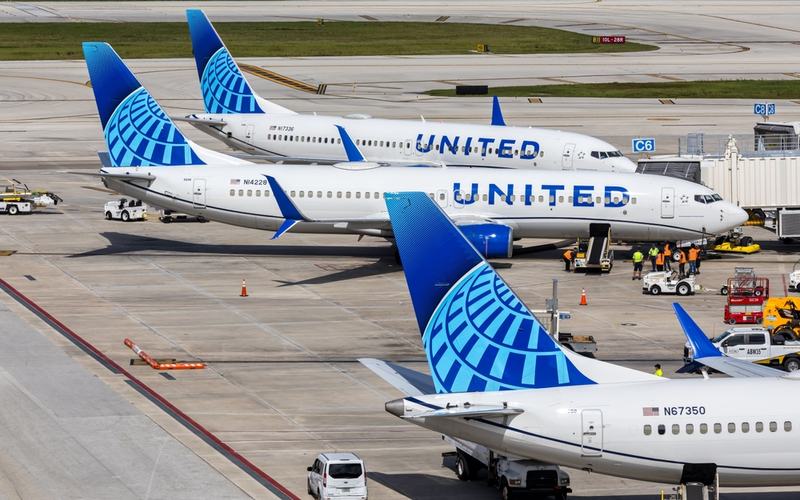
United Airlines will prevent personal artificial intelligence agents from purchasing airline tickets through its booking systems, citing concerns about customer privacy, unauthorized transactions, and federal aviation requirements, The Wall Street Journal reported Wednesday.
The policy will allow automated assistants to search United's available flights and display ticket prices, but they will not be permitted to complete reservations or make purchases on behalf of customers.
United said allowing outside agents to conduct transactions could expose sensitive personal information or result in unintended purchases. The airline also raised concerns that automated systems could fail to meet requirements imposed by the Federal Aviation Administration and Department of Transportation.
One example involves passenger safety declarations required during check-in. Travelers must confirm that their checked baggage does not contain explosives, a responsibility United says an automated assistant cannot fulfill on a passenger's behalf.
United CEO Scott Kirby addressed the issue Tuesday at an event in Chicago, acknowledging the potential of automated technology while questioning whether airlines should allow outside companies to become intermediaries between carriers and their customers.
"To be honest, I don't want to create another middleman," Kirby said.
The airline said relatively few reservations currently originate from automated agents. Its systems can distinguish bookings made directly by individual customers from those submitted through traditional travel agencies or automated assistants. United plans to continue evaluating the technology as personal agents develop and has encouraged other businesses to adopt safeguards protecting customer information and safety.
The decision comes as airlines, financial institutions, retailers and other businesses confront the growth of automated assistants capable of navigating websites, comparing prices and completing purchases with limited human involvement. Unlike conventional chatbots that primarily respond to questions, these agents can carry out transactions and manage reservations independently.
United joins Amazon and other companies that have restricted automated purchasing tools amid concerns about security, customer relationships and the potential loss of direct control over transactions.
Other airlines have taken different approaches. Southwest Airlines introduced a ChatGPT plug-in earlier this year that allows customers to search its flight inventory and compare available options through the chatbot. CEO Bob Jordan described the initiative as an opportunity to evaluate how travelers might use automated assistants when planning trips.
Delta Air Lines has also said authenticated AI assistants can complete bookings, while maintaining additional safeguards for sensitive reservations, including those involving unaccompanied minors.
Interest in automated travel services is also growing among technology companies. OpenAI acquired Odessia, a startup developing travel-booking technology, this week, while Meta CEO Mark Zuckerberg has identified travel planning as a potential application for the company's Muse AI agent.
Despite the growing investment, companies have reported relatively limited use of automated purchasing so far. United's decision reflects continuing uncertainty over how much control businesses will allow outside agents to exercise when handling customer transactions.

Comments
No comments yet. Be the first to share your thoughts.