
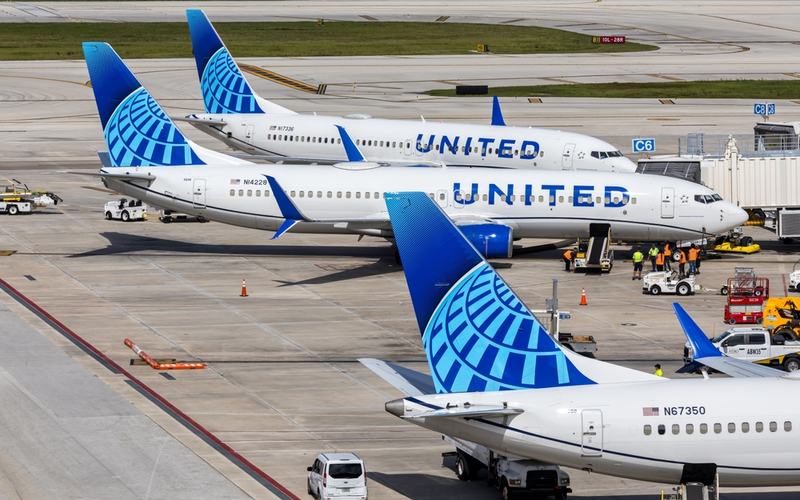
United Airlines confirmed it will increase checked bag fees for tickets purchased starting Friday, marking its first hike in two years as rising fuel costs pressure the industry. The increase comes as global oil markets remain volatile following the recent Iran conflict.
Customers flying within the United States, Mexico, Canada, and Latin America will see a $10 increase for first and second checked bags, while the fee for a third checked bag will rise by $50. Prepaid baggage fees, currently set at $35 for the first bag, $45 for the second, and $150 for the third, will increase to $45, $55, and $200, respectively. Bags paid within 24 hours of travel will also rise to $50, $60, and $200.
United said passengers who prepay online at least 24 hours before departure will continue to receive a $5 discount on the first two checked bags. The airline also noted that certain customers, including MileagePlus Premier members, United credit card holders, active-duty military personnel, and premium cabin travelers, will remain eligible for free checked bags.
While United did not directly attribute the price hike to fuel costs, CEO Scott Kirby recently warned employees that jet fuel prices have more than doubled in recent weeks. He said that if prices remain at current levels, the airline could face an additional $11 billion in annual fuel expenses, more than double the company’s most profitable year.
The move follows similar action by JetBlue Airways, which raised checked bag fees in March, citing disruptions to global oil supply linked to the Iran conflict. Industry analysts note that fee increases by one airline are often followed by competitors, though American Airlines, Delta Air Lines, Southwest Airlines, and Frontier Airlines have not yet announced similar changes.
Fuel prices have surged since late February, when conflict involving Iran disrupted a significant portion of global oil supply flowing through the Strait of Hormuz. As of this week, jet fuel in major U.S. markets averaged $4.88 per gallon, up more than 95% from pre-conflict levels, according to industry data.

Comments
No comments yet. Be the first to share your thoughts.