
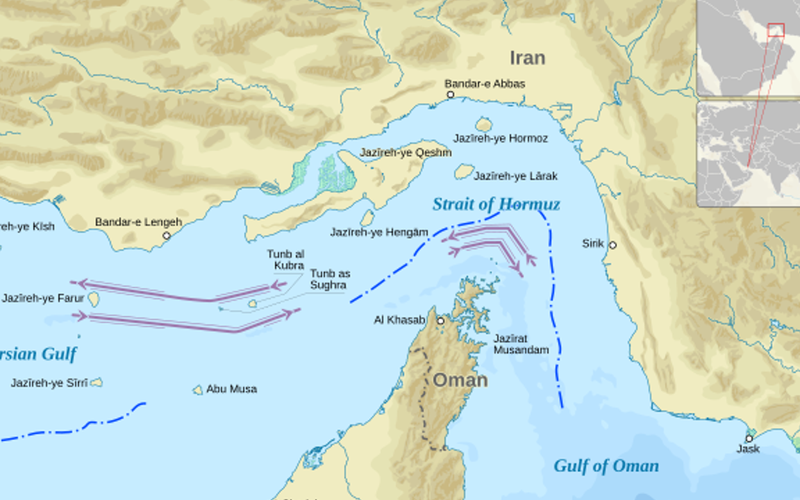
Key U.S. allies are reversing course and signaling support for defending the Strait of Hormuz, a vital global corridor, after weeks of resisting involvement as tensions with Iran intensified.
Leaders from the United Kingdom Government, the French Government, the German Government, the Italian Government, the Netherlands, and the Government of Japan issued a joint statement condemning Iran’s actions and pledging to help ensure safe passage through the strait.
The shift comes after Iran effectively shut down the waterway, through which roughly 20% of the world’s oil supply typically flows, triggering a sharp spike in global energy prices. Crude oil has surged by roughly 50% since late February, with consumers already feeling the impact at the gas pump.
In their statement, allied leaders called on Iran to immediately halt efforts to disrupt shipping, including laying mines and launching drone and missile attacks. They warned that continued interference threatens global energy markets and international security.
“We express our readiness to contribute to appropriate efforts to ensure safe passage through the Strait,” the leaders said, marking a notable escalation in their posture after initially declining to join U.S.-led efforts.
Donald Trump had previously urged allies to step in, arguing that nations reliant on Middle Eastern oil should play a direct role in protecting the route. He also warned that failure to act could have broader implications for alliances such as NATO.
NATO Secretary General Mark Rutte emphasized the urgency of reopening the strait, calling it “crucial for the world economy” and expressing confidence that allied nations would act in their shared interest.
The developments follow a series of escalating attacks. Iranian forces targeted oil infrastructure across the Gulf, including sites in Saudi Arabia, the United Arab Emirates, and Kuwait, in retaliation for earlier U.S. and Israeli strikes on Iranian energy facilities.
Meanwhile, U.S. Defense Secretary Pete Hegseth signaled that American military operations would continue to intensify, describing ongoing strike packages aimed at degrading Iran’s capabilities.
With no immediate resolution in sight, the growing international involvement underscores the high stakes surrounding the Strait of Hormuz, where prolonged disruption could have far-reaching consequences for global markets and geopolitical stability.

Comments
No comments yet. Be the first to share your thoughts.