
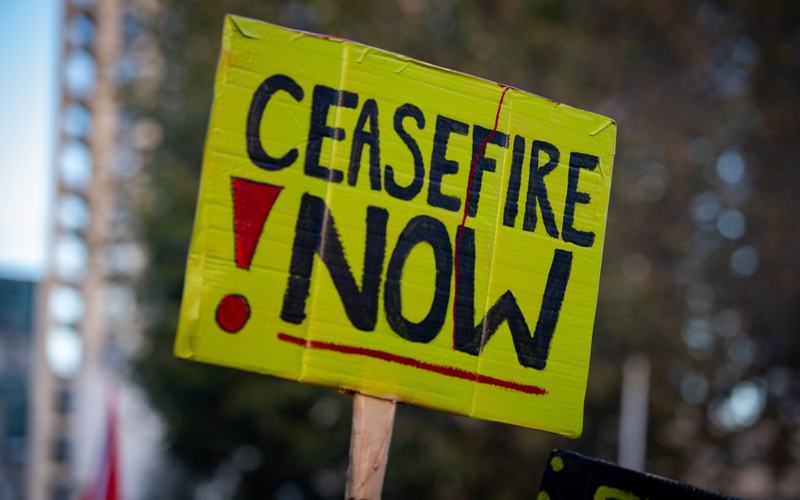
The United States has proposed a one-month ceasefire with Iran to pave the way for discussions on a comprehensive 15-point plan aimed at ending the ongoing conflict. The proposal, reported by Israeli media including Channel 12, comes as President Donald Trump cited productive indirect talks and ordered a five-day pause on strikes against Iranian energy infrastructure.
Trump announced the postponement early this week on Truth Social, stating that the U.S. and Iran held detailed conversations over the past two days toward a 'complete and total resolution' of hostilities. He instructed the Department of War to hold off on targeting power plants and energy sites, contingent on continued progress in negotiations involving envoys Steve Witkoff and Jared Kushner. The move triggered an immediate rally in global oil futures markets amid fears of disruptions in the Strait of Hormuz.
The 15-point framework outlines stringent U.S. demands, including the full dismantlement of Iran's nuclear facilities at Natanz, Isfahan, and Fordow, a commitment to never pursue nuclear weapons, and the handover of its 450 kilograms of 60% enriched uranium stockpile to the International Atomic Energy Agency. Additional requirements call for Iran to cease funding and arming regional proxies, limit its missile program to self-defense purposes, and ensure the Strait of Hormuz remains open as a free maritime corridor. In exchange, Iran would receive a complete lifting of international sanctions, U.S. assistance for civilian nuclear energy like the Bushehr plant, and the removal of the JCPOA's 'snapback' sanctions mechanism.
Trump described the discussions as constructive, claiming Iran offered a 'very big present' related to non-nuclear energy concessions and Hormuz access, and insisted the U.S. was negotiating with 'the right people' who 'want a deal badly.' Iranian officials, however, dismissed reports of direct talks as 'fake news,' with parliament speaker Mohammad Baqer Qalibaf denying any negotiations. Tehran has maintained it never requested a ceasefire and remains committed to defending itself.
Israel expressed unease over the ceasefire proposal, fearing it could lead to a vague 'framework agreement' allowing Iran time to regroup before firm commitments are secured. Security leaders worry the month-long pause, modeled on prior Trump-mediated deals with Hamas and Lebanon, might undermine hard-won military gains.
The war erupted on February 28, 2026, after stalled indirect talks in Oman and Geneva broke down under a Trump ultimatum. U.S. and Israeli strikes targeted nuclear sites and assassinated top Iranian figures, including Supreme Leader Ali Khamenei, prompting Iranian missile barrages on Israel and U.S. assets. This conflict follows a 2025 round of negotiations that collapsed amid Israeli preemptive attacks on Iranian facilities.
The proposal reflects U.S. confidence in achieving its objectives, curbing Iran's nuclear ambitions and proxy network, while offering economic incentives to incentivize compliance. Markets await Iran's response as talks reportedly continue.

Comments
No comments yet. Be the first to share your thoughts.