
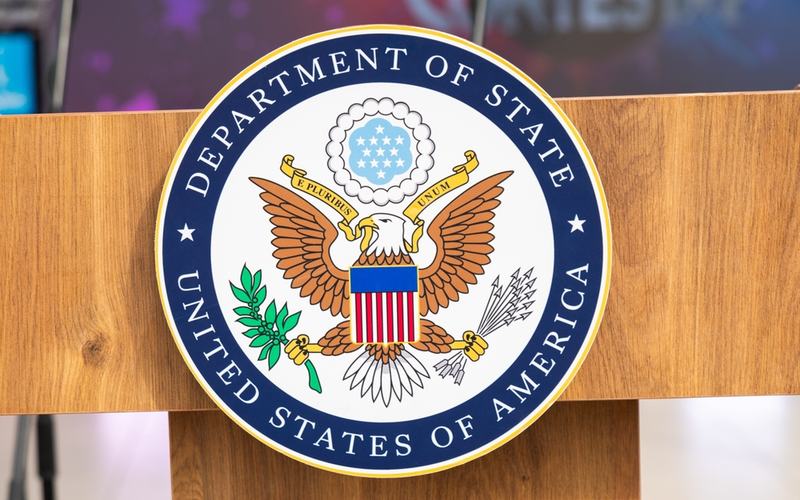
The U.S. State Department announced Thursday that it will host a meeting next week in Washington to discuss ongoing ceasefire negotiations between Israel and Lebanon.
A State Department official stated, "We can confirm that the Department will host a meeting next week to discuss ongoing ceasefire negotiations with Israel and Lebanon." The first session will take place at the State Department, with Israeli Ambassador Yechiel Leiter, Lebanese Ambassador Nada Hamadeh Moawad, or former Ambassador Simon Karam, and U.S. Ambassador to Lebanon Michel Issa representing their sides.
Israeli Prime Minister Benjamin Netanyahu directed his cabinet Thursday to begin direct talks with Lebanon "as soon as possible." His office said the negotiations will focus on "disarming Hezbollah and establishing peaceful relations between Israel and Lebanon." Netanyahu added that Israel appreciates Lebanese Prime Minister Nawaf Salam's call to demilitarize Beirut but emphasized there is no ceasefire in Lebanon, with military operations against Hezbollah continuing.
The announcement comes amid heightened tensions following Israeli airstrikes across Lebanon on Wednesday that killed at least 250 to 303 people and wounded over 1,150 others. The strikes targeted more than 100 sites in just 10 minutes, including in Beirut's southern suburbs and southern Lebanon villages. Israel issued evacuation warnings for areas like Jnah, which houses hospitals and shelters thousands of displaced people. Strikes continued on Thursday on Hezbollah rocket sites.
Israel launched a ground invasion into southern Lebanon on March 2 after Hezbollah fired missiles in support of Iran. The Israeli military has since established positions several kilometers inside Lebanese territory, including near Tyre, and aims to create a security zone up to the Litani River, 20 to 30 kilometers from the border. Lebanese officials report about 1,500 deaths and over one million displaced since the Iran war began.
Lebanese Prime Minister Salam stated after a cabinet meeting on Thursday that Beirut should become a "demilitarized city" and that negotiations must be conducted solely by the Lebanese state. President Joseph Aoun has called a ceasefire the "only solution" and urged direct talks with Israel a month ago. Lebanon's cabinet tasked its military in August 2025 with controlling all armed groups' weapons, targeting Hezbollah after its 2024 war with Israel, though nationwide efforts have stalled as Hezbollah rejects disarmament.
The talks occur separately from U.S.-Iran ceasefire discussions set for this weekend in Pakistan, after which Iran rejected negotiating on Lebanon's behalf. A two-day-old U.S.-Iran truce excludes Lebanon, according to U.S. and Israeli officials, though Iran insists it applies and has warned of repercussions for continued strikes. U.S. officials, including President Donald Trump, urged Israel to scale back operations to preserve the truce.
This marks the first direct Israeli-Lebanese talks hosted by the United States. Lebanese officials have requested a ceasefire announcement alongside the talks, similar to prior models.

Comments
No comments yet. Be the first to share your thoughts.