
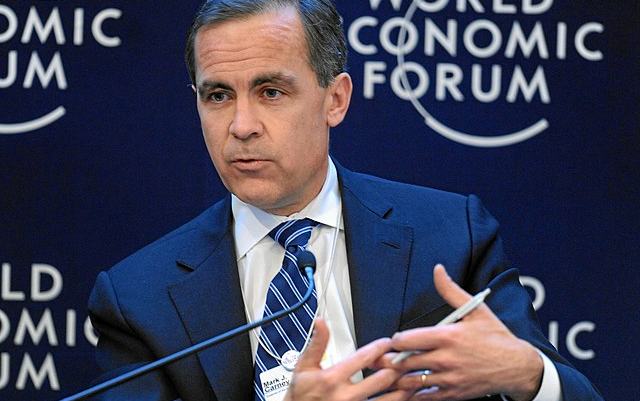
Canadian Prime Minister Mark Carney said Sunday that Canada’s deep economic integration with the United States, long viewed as a pillar of stability, has become a vulnerability that his government must now address through diversification and domestic reform.
In a recorded 10-minute address, Carney said global conditions have grown more unstable and argued that recent changes in U.S. trade policy have disrupted long-standing economic assumptions between the two countries. He said higher tariffs imposed under the administration of Donald Trump have affected key Canadian sectors, including steel and automotive manufacturing, while also discouraging private investment due to ongoing uncertainty.
Carney stated that Canada must reduce its reliance on a single foreign partner and pursue broader trade relationships. He said the government will focus on attracting investment, expanding clean energy capacity, lowering internal trade barriers, and improving housing affordability, while also increasing defense spending and reducing taxes.
He also pointed to political friction between the two countries, referencing recent comments from Trump suggesting Canada could become the 51st U.S. state, remarks that have drawn criticism from Canadian officials and public backlash domestically.
The prime minister said Canada must prepare for a global environment where traditional alliances cannot be taken for granted, warning against assuming a return to previous economic conditions. He said his administration will provide regular updates on efforts to reduce dependence on U.S. markets and strengthen internal resilience.
Carney, a former central bank governor who led both the Bank of Canada and the Bank of England, has previously warned about rising economic coercion and global fragmentation. His remarks at the World Economic Forum earlier this year drew criticism from Trump, who pushed back on the suggestion that smaller nations face economic pressure from larger powers.
His latest address comes shortly after his party secured a governing majority and as opposition leaders press for progress on a revised U.S.-Mexico-Canada trade agreement review scheduled for July.
Carney said Canada must take greater control over its economic and security future, emphasizing that long-term stability cannot depend on expectations of unchanged U.S. policy.

Comments
No comments yet. Be the first to share your thoughts.