
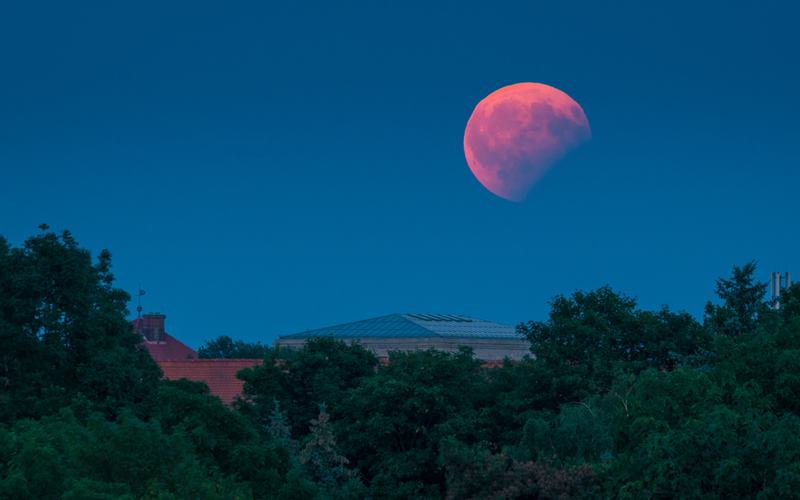
A deep partial lunar eclipse occurs later this week as the moon passes through Earth's shadow, dimming dramatically and taking on a coppery reddish hue for many observers.
The event unfolds overnight on Thursday, August 27, into the early morning hours of Friday, August 28. It reaches maximum at about 12:13 a.m. Eastern Daylight Time on August 28, when 96 percent of the moon enters the darkest part of Earth's shadow.
Unlike a total lunar eclipse, this one stops short of full coverage. Still, the moon appears noticeably darker and reddish-orange at peak, earning it the popular label of a near blood moon.
Viewers in North and South America, western Europe, and parts of Africa and the eastern Pacific have the best seats. In the Eastern Time Zone, the partial phase begins around 10:34 p.m. on August 27, peaks near midnight, and ends about 1:52 a.m. on August 28.
No special equipment is required. The eclipse is safe to watch with the naked eye, binoculars, or a small telescope. Clear skies and a location away from bright city lights improve the view.
This marks one of the deeper partial lunar eclipses in recent years and the last notable one visible from much of the Americas until 2028. The full moon of August also coincides with the event, adding to the spectacle.
Astronomers note that the reddish color results from sunlight filtering through Earth's atmosphere and bending toward the moon. The deeper the eclipse, the more pronounced the effect becomes.
Weather permitting, the show lasts several hours from start to finish, giving plenty of time for casual viewing or photography.

Comments
No comments yet. Be the first to share your thoughts.