
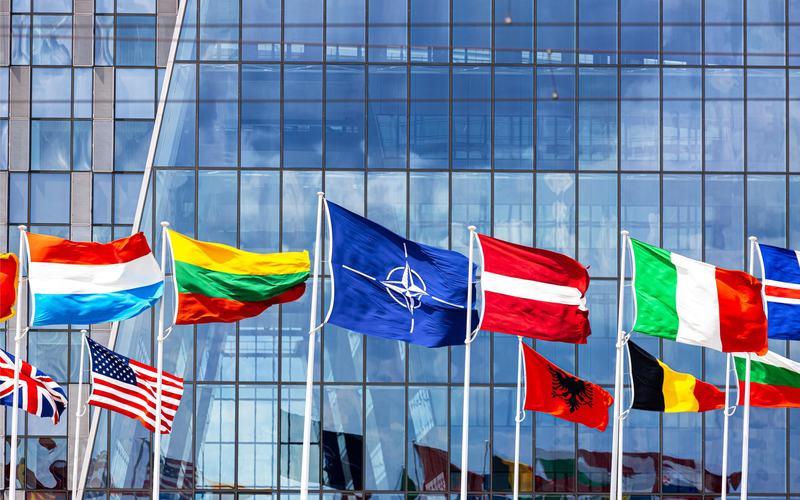
European nations are fast-tracking a fallback plan to ensure NATO's defense capabilities persist even if the United States reduces its role or withdraws entirely. The Wall Street Journal reported on Tuesday that the proposal, sometimes called "European NATO," would leverage the alliance's existing military structures while shifting more command responsibilities to Europeans in logistics, intelligence, and top posts.
The urgency stems from President Donald Trump's repeated threats to exit NATO, intensified by European allies' refusal to join U.S.-led operations in the war against Iran that began on February 28, 2026. Trump stated in a Telegraph interview that reconsidering U.S. membership was "beyond reconsideration," criticizing the alliance as a "paper tiger" and allies for not automatically supporting efforts to reopen the Strait of Hormuz. He has also weighed pulling some of the more than 80,000 U.S. troops stationed in Europe, particularly from Germany, back to the United States, though no final decision has been made.
Germany has emerged as a key backer, with Chancellor Friedrich Merz and Defense Minister Boris Pistorius advocating for Europeans to take greater responsibility. Pistorius said, "NATO must become more European to remain trans-Atlantic." Finland's President Alexander Stubb emphasized a managed burden shift, noting, "It's time for Europe to take more responsibility for its own security and defense." Support also comes from France, the U.K., Poland, the Nordic countries, Sweden, and Canada, forming a coalition of the willing.
The plan envisions Europeans leading NATO's air-and-missile defenses, reinforcement routes into Poland and the Baltics, and major exercises. It calls for boosting production in areas like anti-submarine warfare, space reconnaissance, and air refueling, alongside reintroducing military drafts in some nations. Discussions occur informally through side meetings, with transitions already underway in European-led Nordic exercises.
Challenges remain significant. NATO's command is U.S.-centric, and Europeans lack full capabilities in intelligence and nuclear deterrence. No European nation matches the U.S. stature for leadership, though France and Britain may expand their nuclear roles. A 2024 U.S. law bars unilateral withdrawal without two-thirds Senate approval or congressional action, but Trump could still reduce troops and officers.
NATO Secretary-General Mark Rutte has sought to calm tensions, describing the alliance as more "European-led" while urging commitments on the Strait of Hormuz. Retired U.S. Admiral James Foggo noted Europeans have capable officers but must invest faster. Trump's pressure has prompted pledges to raise defense spending to 5% of GDP by 2035.
The developments reflect broader trans-Atlantic strains, including Trump's Greenland annexation threats and Ukraine policy shifts, as Europe prepares for potential U.S. disengagement while preserving alliance deterrence against Russia.

Comments
No comments yet. Be the first to share your thoughts.