
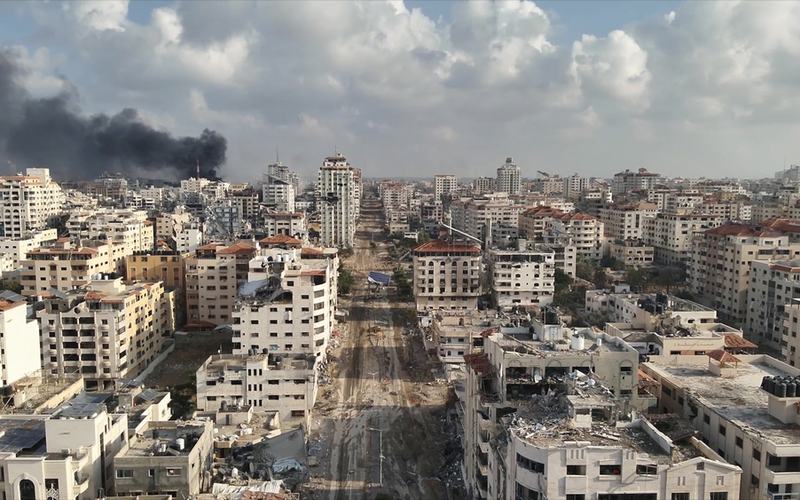
Hamas formally rejected an eight-month phased disarmament plan proposed by President Donald Trump's International Board of Peace, escalating tensions over the future of the Gaza ceasefire. The Iran-backed group conveyed its stance to Board representatives after a deadline expired over the weekend, insisting on preconditions such as Palestinian statehood recognition, a full Israeli Defense Forces withdrawal, and retention of light weapons for self-defense.
The Board, established under Trump's 20-point Gaza peace framework agreed to in October 2025, had demanded Hamas finalize a demilitarization agreement by the end of last week. Hamas countered with a three-year timeline and demands for a neutral party to oversee weapons transfers, while rejecting full disarmament without security guarantees against Israeli incursions.
The standoff comes amid ongoing ceasefire violations. Since the start of the current Iran conflict, Hamas has launched at least 22 attacks on Israeli forces along the phase one boundary known as the Yellow Line. The IDF responded with precision strikes, eliminating several Hamas operatives identified as threats, including Muhammad Dawwad on April 8, Ali Ahmed Ali Amrain on April 4, and Ahmed Muhammad Saleh on April 9.
President Trump has repeatedly warned of severe consequences for noncompliance. In February, he stated, "Now they have to disarm. Some people say they won’t, but they will, and if they don’t, they’re gonna not be around any longer." The administration maintains that Hamas disarmament is non-negotiable for advancing to phase two reconstruction, with contingency plans potentially including resumed Israeli military operations.
Vice President JD Vance recently engaged with Israeli leaders on regional security. On April 12, he spoke by phone with Prime Minister Benjamin Netanyahu from his flight back from Islamabad, though the discussion focused on Iran rather than Gaza. Netanyahu's government has coordinated closely with Washington, supporting firm stances against threats from Iran and its proxies.
The original ceasefire halted 19 months of intense fighting that began after Hamas's October 7, 2023, attack on Israel. Phase one has held tenuously, with U.S. troops monitoring compliance at sites in southern Israel. Gulf states and 59 nations back the deal, but Hamas's intransigence threatens broader stability amid the U.S.-Iran tensions over the Strait of Hormuz.
Board High Representative Nickolay Mladenov presented the disarmament blueprint, which includes destroying Gaza's tunnel network. Failure to comply could unravel the truce, prompting calls for the Board to stand firm without concessions.

Comments
No comments yet. Be the first to share your thoughts.