
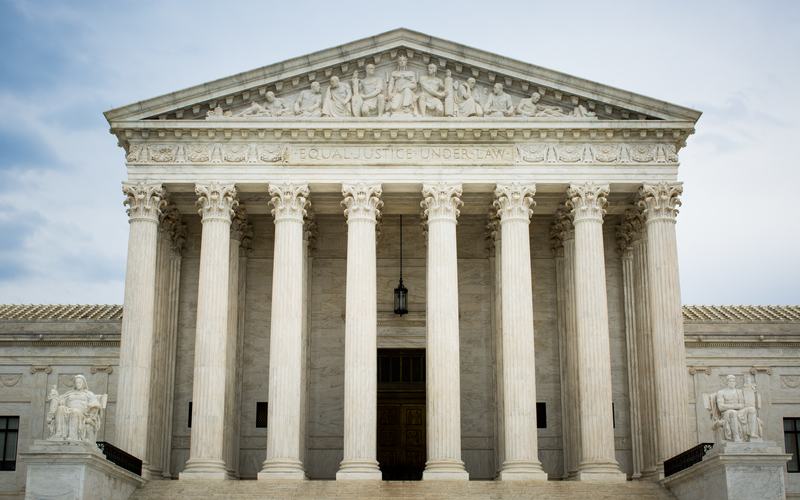
The Supreme Court of the United States on Monday declined to hear a case brought by Massachusetts parents challenging a public school district’s policy on student gender identity, allowing a lower court decision to stand.
The case centered on actions by officials in the Ludlow, Massachusetts, school system, where teachers and administrators supported a middle school student’s request to use a different name and pronouns at school without informing the parents. The parents argued that the district’s approach violated their constitutional rights under the 14th Amendment, which protects parental authority over the care and upbringing of children.
The justices’ decision not to take up the appeal leaves intact a ruling by the U.S. Court of Appeals for the First Circuit, which found that the parents had not demonstrated a sufficient legal basis to claim their rights were violated. The appeals court concluded that the school’s use of a student’s preferred name and pronouns did not constitute medical treatment or otherwise infringe on parental authority in a way that would meet the threshold for a constitutional claim.
The lawsuit was filed by the parents of a student who identified as genderqueer while attending Baird Middle School. According to court filings, the student asked school staff to use a different name and pronouns, but requested that the original name and pronouns still be used when communicating with the parents.
The parents, represented by Alliance Defending Freedom, argued that school officials effectively concealed important information and promoted gender identity concepts without parental knowledge or consent. They contended this undermined their role in directing their child’s upbringing.
A federal district court dismissed the case in 2022, and the First Circuit upheld that dismissal, stating that the policy did not coerce students to hide information from parents or prevent parents from guiding their children outside the school environment.
The Supreme Court’s decision comes as disputes over parental rights and policies related to transgender and gender-nonconforming students continue to play out across the country. The court has declined to hear similar cases in recent years, even as it takes up other disputes involving gender-related policies.
Recent rulings have addressed related issues, including state laws involving transgender medical care for minors and participation in school athletics, with additional decisions expected in ongoing cases.
By declining review, the Supreme Court allows the Massachusetts ruling to remain in effect, leaving the broader constitutional questions unresolved at the national level for now.

Comments
No comments yet. Be the first to share your thoughts.