
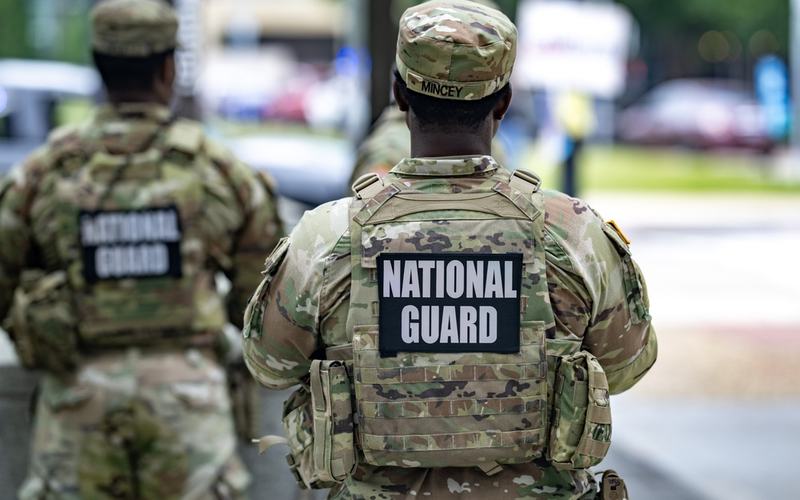
President Trump directed the mobilization of up to 1,700 National Guard troops in 19 states to expand federal support for immigration enforcement and anti-crime operations beyond the ongoing mission in Washington, D.C.
Pentagon officials and internal documents obtained by Fox News outlined the deployments, which target states including Alabama, Arkansas, Florida, Georgia, Idaho, Indiana, Iowa, Louisiana, Nebraska, Nevada, New Mexico, Ohio, South Carolina, South Dakota, Tennessee, Texas, Utah, Virginia, and Wyoming. Texas is expected to receive the largest share of the force.
The troops will assist Immigration and Customs Enforcement with tasks such as personal data collection, fingerprinting, DNA swabbing, and photographing individuals in custody. Additional personnel will back local law enforcement priorities in the selected states.
This move builds on the National Guard presence in the capital that began in August 2025 under a crime emergency declaration. Nearly 4,600 Guard members currently operate in D.C., with the mission extended through the end of Trump's term in January 2029 at an estimated additional cost of $1.43 billion.
Administration statements have tied the broader effort to restoring order and addressing illegal immigration. The state-level expansions focus on jurisdictions led by Republican governors, where cooperation with federal authorities has been strongest.
Earlier deployments to some Democratic-led cities faced legal hurdles and were scaled back. The new plan avoids those challenges by concentrating resources in supportive states.
Costs for the D.C. mission alone have already reached hundreds of millions of dollars, with monthly expenses estimated around $51 million to $55 million. The expanded state operations add to the overall federal commitment to domestic security operations.
Guard members will operate under Title 32 or federal authority as appropriate, focusing on support roles rather than direct policing in most cases. The Pentagon has not released a precise timeline for activation but indicated deployments would occur in the coming weeks.

Comments
No comments yet. Be the first to share your thoughts.