
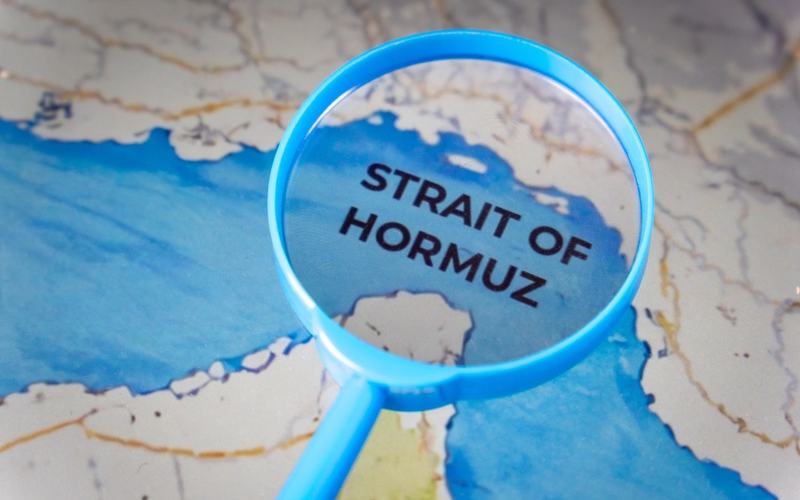
President Donald Trump announced Thursday that the U.S. is maintaining control over the Strait of Hormuz and will not allow it to fully reopen, citing concerns that doing so would enable Iran to resume lucrative oil exports. In a Truth Social post, Trump stated the Strait remains "sealed up tight" until Iran agrees to a deal, emphasizing that Iran desperately wants it open to generate approximately $500 million per day in revenue.
The announcement came amid escalating tensions in the ongoing 2026 Strait of Hormuz crisis, a key flashpoint in the broader U.S.-Iran war that began with U.S. and Israeli airstrikes on February 28. Those strikes targeted Iranian nuclear sites and military facilities, assassinating Supreme Leader Ali Khamenei and wounding his successor, Mojtaba Khamenei. Iran retaliated by closing the strait, attacking over 20 commercial vessels, and laying mines, halting nearly all traffic through the vital waterway that carries 20% of global seaborne oil.
Trump also ordered the U.S. Navy to "shoot and kill" any Iranian boats laying mines in the strait, directing minesweepers to operate at triple capacity with no hesitation. "We have total control over the Strait of Hormuz. No ship can enter or leave without the approval of the United States Navy," he wrote. This followed Iran's seizure of two container ships, the Greek-owned Epaminondas and Panamanian-flagged MSC Francesca, on Thursday, which Tehran claimed violated maritime security rules.
The U.S. has enforced a naval blockade on Iranian ports since April 13, after talks in Islamabad collapsed, preserving passage for non-Iranian traffic while targeting Tehran's oil exports. Iran briefly announced a full reopening on April 17 amid a Lebanon truce extension but re-closed it two days later in response to the ongoing U.S. blockade. A fragile ceasefire, extended indefinitely on Tuesday at Pakistan's request, holds but excludes resolution on the strait.
The standoff has devastated Iran's economy by slashing its oil revenues, a primary war aim for the Trump administration, which views U.S. energy independence, now producing over 22 million barrels daily, as insulation from global shocks. Oil prices surged to a peak of $126 per barrel in March before stabilizing around $100, fueling U.S. gasoline prices above $4 per gallon in some states. Global impacts include production cuts by Gulf producers, LNG shortages in Europe, and disruptions to fertilizers and commodities.
Trump attributed Iran's reluctance to negotiate to internal power struggles between hardliners and moderates following Khamenei's death, claiming Tehran is "hobbled by infighting." Iranian President Masoud Pezeshkian rejected such divisions, insisting on unity. The Pentagon estimates that clearing the estimated 20 sea mines could take six months, complicating any near-term reopening.
As diplomatic efforts stall, Iran snubbed recent Pakistan talks, and the dual blockades persist, with roughly 2,000 ships and 20,000 mariners stranded. Trump reiterated that the U.S. strategy is working, positioning the blockade as leverage to force concessions from a financially strained Iran.

Comments
No comments yet. Be the first to share your thoughts.