
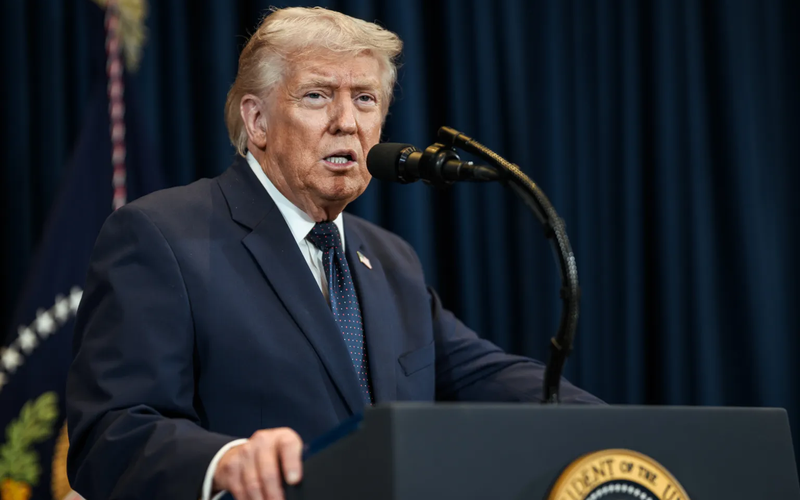
President Trump signaled Wednesday that the United States may not extend the United States-Mexico-Canada Agreement when it undergoes its mandatory joint review next month.
Speaking at the White House, Trump said he is “not looking to renew” the pact. He argued that the United States does not need products from Canada or Mexico and would perform better without the trade agreement. Trump also praised the six-year review mechanism built into the deal, which he said allows for reconsideration or termination.
The USMCA, which replaced NAFTA, took effect in July 2020. Its Article 34 requires the three countries to hold a joint review on the sixth anniversary of implementation, July 1, 2026. At that point, the parties must decide whether to extend the agreement for another 16 years, enter annual reviews, or allow it to proceed toward expiration in 2036.
Trump has long criticized trade imbalances with North American partners and made tariffs a central part of his economic agenda. The review process gives the administration leverage to seek concessions on issues including labor standards, automotive rules of origin, and non-trade matters such as migration and border security.
Canada has already signaled interest in renewal. Canadian Trade Minister Dominic LeBlanc sent a letter to U.S. and Mexican counterparts noting the agreement’s benefits while acknowledging possible areas for improvement. Mexico has engaged in preliminary talks aimed at preserving the deal with adjustments.
Analysts note that withholding renewal approval could pressure Mexico and Canada to offer further concessions during negotiations. The Trump administration has previously used tariff threats to extract changes in bilateral trade relations.
The outcome of the July review remains uncertain. If the United States declines to confirm extension, the agreement enters a period of annual reviews rather than immediate termination. This structure was designed to give parties flexibility while maintaining the framework of integrated North American supply chains.
Business groups in all three countries have urged continuity, citing the agreement’s role in supporting manufacturing and agriculture. Supporters of a tougher stance argue that the original USMCA did not fully resolve underlying trade deficits or protect American workers from offshoring pressures.
The review coincides with broader trade policy shifts under the current administration, including new tariff measures targeting multiple partners. Any decision on USMCA will influence investment decisions and supply chain planning across the continent in the months ahead.

Comments
No comments yet. Be the first to share your thoughts.