
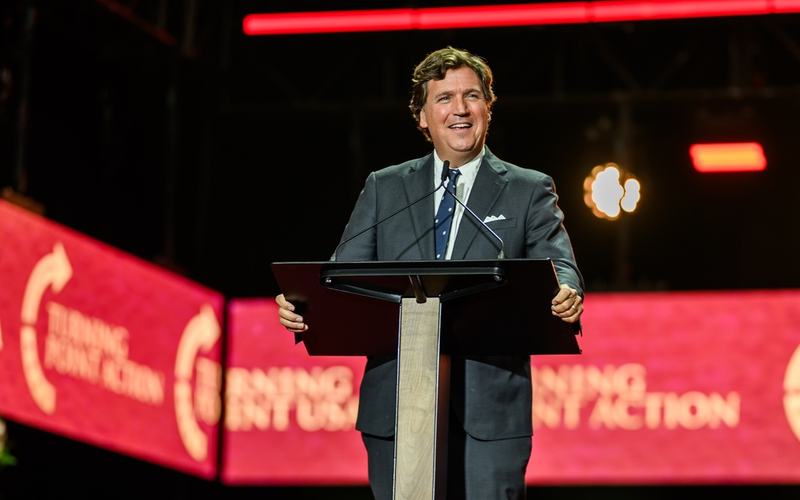
Former Fox News host Tucker Carlson issued an apology this week for his past support of President Donald Trump, drawing criticism from conservatives who view the reversal as a late and self-serving break from a movement he once helped lead.
Speaking on “The Tucker Carlson Show” in a conversation with his brother, Buckley Carlson, Tucker Carlson acknowledged his role in promoting Trump’s rise, stating that he and others were “implicated” in the current political moment. He went further, apologizing to his audience and claiming he had “misled” people, though he insisted it was not intentional.
The remarks mark a sharp departure from Carlson’s previous posture. He was one of Trump’s most visible media allies during the 2024 election cycle, campaigning publicly on his behalf and appearing at major events, including a rally at Madison Square Garden. He also maintained proximity to the administration after the election, including a visit to the White House in early 2026.
Critics argue the apology comes only after Carlson began publicly breaking with Trump over foreign policy, particularly the administration’s handling of the Iran conflict. Carlson has denounced the war in harsh terms, calling it “disgusting” and “evil,” and accusing Trump of betraying campaign promises to avoid a broader global conflict.
The shift has fueled accusations that Carlson is attempting to distance himself from decisions he once defended, rather than taking consistent positions when it mattered politically. His critics within conservative circles say his influence helped shape voter opinion during key moments, making his reversal more consequential.
Trump has responded forcefully to Carlson’s criticism. In posts on Truth Social, the president grouped Carlson with other media figures who have broken with him, including Megyn Kelly, Candace Owens, and Alex Jones, dismissing them as unreliable voices and questioning their credibility.
The fallout has extended beyond rhetoric. Buckley Carlson recently stepped down from his role as deputy press secretary to Vice President JD Vance, underscoring the broader impact of the dispute within political circles aligned with the administration.
Carlson’s apology has also drawn skepticism from commentators and media figures outside conservative politics, with critics questioning both its timing and sincerity. The episode itself drew significant online attention, reflecting continued public interest in divisions within the broader conservative movement.
The dispute highlights growing fractures among figures who once aligned closely with Trump, particularly over foreign policy and the ongoing conflict involving Iran. As tensions persist and diplomatic efforts remain uncertain, the divide has become more pronounced, with Carlson’s reversal serving as one of the clearest breaks to date from a former ally who played a prominent role in shaping pro-Trump media coverage.

Comments
No comments yet. Be the first to share your thoughts.