
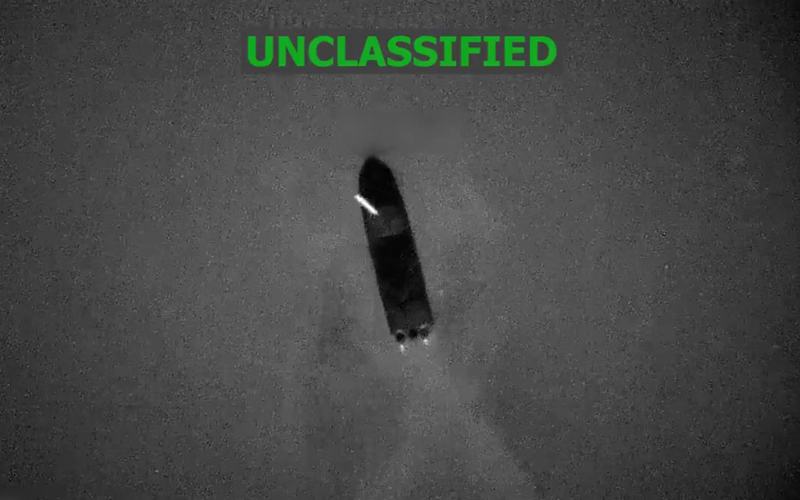
The U.S. military conducted another strike against a suspected drug-smuggling boat in the Caribbean Sea on Monday, killing two people, as part of the Trump administration's ongoing campaign to disrupt narcotics trafficking.
U.S. Southern Command, responsible for military operations in Latin America and the Caribbean, announced the aerial attack on May 4. The command identified the victims as "two male narco-terrorists" aboard a vessel transiting known smuggling routes and engaged in drug trafficking activities, based on intelligence reports. A video released by Southern Command on social media showed the boat moving across the water before a projectile struck it, engulfing the vessel in flames.
No evidence of actual drugs on the boat was publicly released, consistent with previous strikes in the campaign. Gen. Francis L. Donovan, head of Southern Command, ordered the operation. The Pentagon has maintained that such actions target combatants in an armed conflict with drug cartels declared by President Trump.
This latest incident brings the total number of fatalities from the campaign to at least 188 people across more than 50 strikes since early September 2025. The operations, known as Operation Southern Spear, have targeted vessels in the Caribbean Sea and eastern Pacific Ocean, with 15 strikes in the Caribbean alone as of earlier reports.
The Trump administration escalated military efforts against drug cartels following a significant buildup of U.S. forces in the region, including warships and personnel. President Trump has justified the strikes as essential to stem the flow of fentanyl and other drugs killing Americans, framing cartel members as terrorists in a non-international armed conflict. The policy expanded to land targets in Venezuela and Ecuador after the January 2026 capture of former Venezuelan President Nicolás Maduro on drug trafficking charges.
Critics have raised concerns over the legality of the strikes under international and U.S. law, arguing they amount to extrajudicial killings without due process or verifiable evidence. Human rights groups and some experts contend the targets may include civilians or fishermen, and no drugs have been recovered from most vessels. The United Nations and organizations like Amnesty International have condemned the operations. Despite this, the White House insists the actions are lawful self-defense measures.
The campaign has drawn mixed international reactions, with some Caribbean leaders expressing support amid rising drug violence, while countries like Brazil and Mexico have voiced opposition. Domestically, Senate efforts to limit the strikes failed. As overdoses continue to claim tens of thousands of American lives annually, the administration views the boat interdictions as a critical front in the war on drugs.

Comments
No comments yet. Be the first to share your thoughts.