
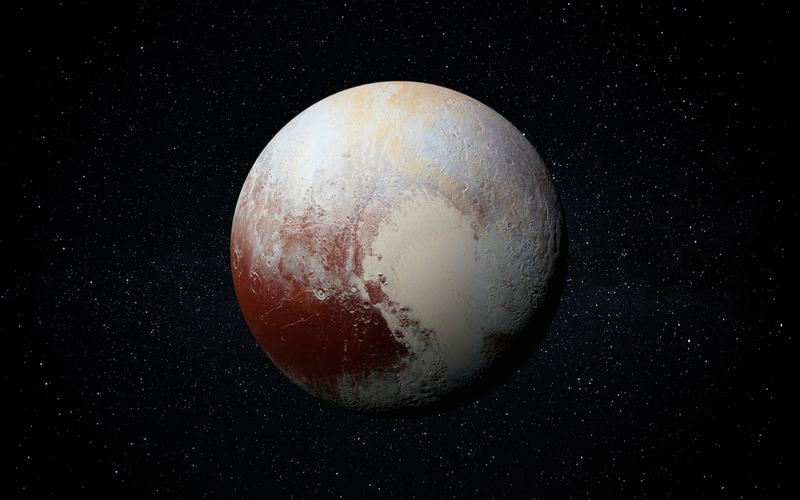
A team of astronomers has identified what appears to be the thinnest atmosphere yet detected around a small icy body in the outer solar system. The object, known as (612533) 2002 XV93 or simply 2002 XV93, measures about 300 miles (500 kilometers) across and resides in the Kuiper Belt beyond Pluto's orbit.
Lead researcher Ko Arimatsu of Japan's National Astronomical Observatory announced the finding today in the journal Nature Astronomy. The discovery marks the smallest known solar system body with a global atmosphere held by gravity, challenging assumptions that such features require larger masses like planets or major moons. This so-called plutino orbits the sun in a 2:3 resonance with Neptune, meaning it completes two laps for every three of the ice giant's. At the time of observation, it was more than 3.4 billion miles (5.5 billion kilometers) from Earth, farther than Pluto.
The detection occurred during a rare stellar occultation on January 10, 2024, when 2002 XV93 passed in front of a distant background star. Japanese telescopes, including one operated by an amateur astronomer, captured the starlight gradually dimming and then recovering, indicating a refractive atmosphere rather than a sharp cutoff from the solid body alone. Arimatsu described the result as "genuinely surprising," noting it alters views on small trans-Neptunian objects, or TNOs.
Estimated to be 5 million to 10 million times thinner than Earth's air and 50 to 100 times sparser than Pluto's. The atmosphere likely consists of methane, nitrogen, or carbon monoxide, gases common on icy outer solar system worlds. These could explain the light-bending effect observed. The layer is far too tenuous to support life or even surface pressure.
Researchers propose two origins: cryovolcanic eruptions spewing gas from the interior, similar to processes hinted at on Pluto and other TNOs, or a recent comet impact vaporizing surface ices. Monitoring could distinguish them; if the atmosphere fades soon, an impact is likelier; persistence or seasonal changes would suggest ongoing internal activity.
The finding drew praise but calls for confirmation. Alan Stern, principal investigator for NASA's New Horizons mission that flew by Pluto in 2015, called it "an amazing development" with "profound" implications if verified, though independent checks are needed. European Southern Observatory astronomer Jose-Luis Ortiz suggested a close-in ring as an alternative, but Arimatsu countered that observations do not match such a feature well.
Future scrutiny by NASA's James Webb Space Telescope could analyze the gases directly. Pluto remains the only other confirmed TNO with an atmosphere, detected decades ago and studied up close by New Horizons. This mini-Pluto expands the catalog, hinting that geological activity may be more widespread among these frozen relics from the solar system's birth.

Comments
No comments yet. Be the first to share your thoughts.