
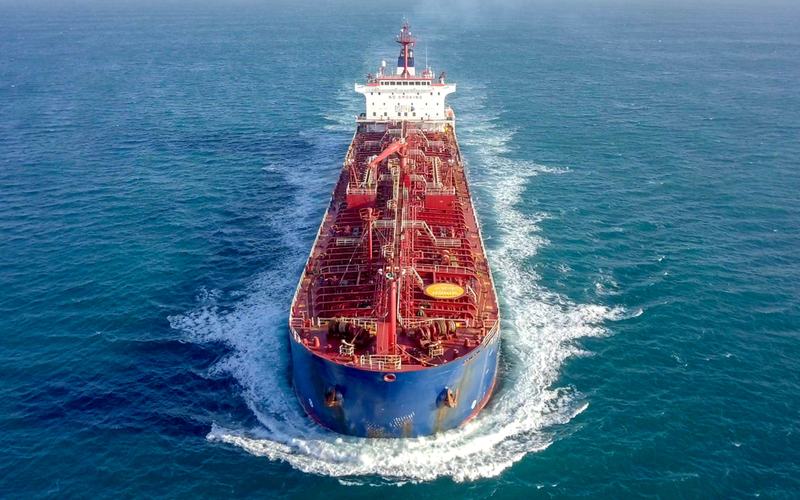
At least 11 tankers have been attacked in and around the Strait of Hormuz since last Monday, raising new concerns about the flow of Persian Gulf oil as fighting intensifies across the region.
Four of the attacks occurred within two days, highlighting the continuing danger for commercial vessels even as U.S. forces protect the region.
The latest incident occurred Monday when a tanker was struck by an “unknown projectile” while transiting the Strait of Hormuz, according to the United Kingdom Maritime Trade Operations. The attack sparked a fire in the ship’s engine room, and the crew was working to contain it.
The attacks come as Yemen’s Saudi-backed government prepares for a major military campaign against the Iran-backed Houthi militia following Houthi attacks on Saudi oil infrastructure.
Saudi Aramco CEO Amin Nasser warned Monday that prolonged disruption to the strait is rapidly depleting global oil reserves and putting additional pressure on energy supplies.
“Few expected a near closure of the world's most critical energy artery to last so long, or its impact to spread so widely,” Nasser said at the Energy Intelligence Forum in London. “This is one of the worst crises of my career, and my career is long.”
Brent crude, the global oil benchmark, was trading around $102 a barrel Monday. Rising Gulf exports, now at their highest level since the war began more than seven months ago, have helped prevent prices from climbing even higher.
The Group of Seven nations agreed Friday to release emergency crude and diesel supplies over the next four months. The move is the second coordinated reserve release since March, though analysts have warned that it may provide only temporary relief from higher prices and shortages.
Nasser said global oil inventories have fallen from roughly 10 billion barrels when the war began to about 6 billion barrels. He described reserves as “scarily thin” and said rebuilding them could take as long as two years.
The security situation has also affected Saudi oil infrastructure. The Houthis claimed Saturday that a missile and drone attack caused fires at an Aramco facility in Riyadh, while a separate drone strike last month temporarily shut down Saudi Arabia’s East-West pipeline.
Nasser said Saudi Arabia’s oil system remained operational despite the attacks, saying the company was continuing to meet customer demand.
Maritime security experts say the increased attacks are aimed at discouraging commercial traffic through the strait. Dimitris Maniatis, founder of maritime risk firm Marisks, said the attacks appear designed to create fear and potentially overwhelm defensive systems through simultaneous missile and drone strikes.
Damage to propulsion systems or other critical machinery could leave large tankers disabled in the narrow shipping corridor, creating further disruption to one of the world’s most important energy routes.
Oil executives say the conflict has already transformed Gulf shipping, forcing vessels to rely more heavily on pipelines, travel longer distances and absorb higher costs. Some ships have also switched off tracking transponders in an effort to reduce their exposure to attacks.

Comments
No comments yet. Be the first to share your thoughts.