
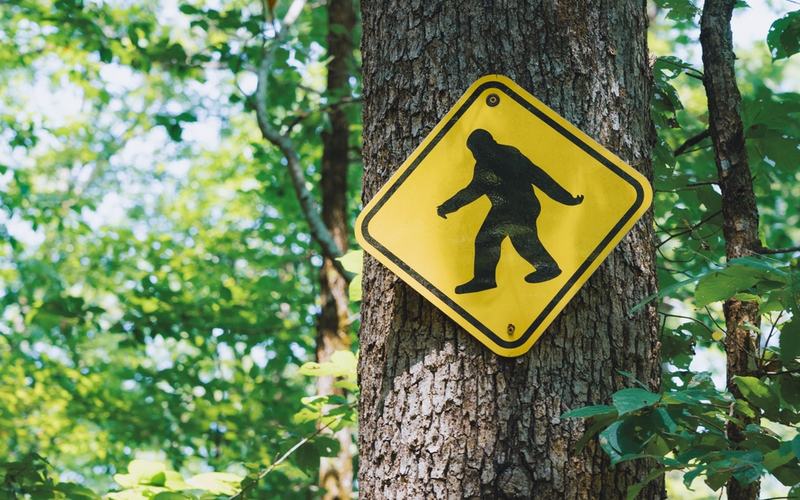
Three historical records documenting alleged Bigfoot sightings in Washington and Montana have been added to the U.S. Forest Service's public records archive, drawing renewed attention from Sasquatch researchers and enthusiasts seeking more government information about the legendary creature.
The documents, posted Oct. 15 in the agency's Freedom of Information Act reading room under the heading "Bigfoot/Sasquatch Records," include accounts dating back to 1941. Their release has fueled speculation that other federal records concerning unexplained encounters could eventually become public.
The timing has attracted particular attention because the Trump administration has also pursued greater disclosure of government information involving unidentified flying objects. Bigfoot researchers hope that broader transparency efforts could extend to historical reports involving alleged encounters with the creature.
Jeremiah Byron, host of the Bigfoot Society podcast, told The Washington Post that he hopes federal agencies are preparing to release additional material. He also encouraged people who claim to have encountered Bigfoot to share their experiences.
One of the newly available records concerns a 1982 investigation involving Paul Freeman, a Forest Service patrolman who reported seeing a large, unidentified creature in Washington's Umatilla National Forest. Freeman later discovered unusual footprints, leading to an investigation by a wildlife biologist and a U.S. Border Patrol tracker.
The investigators concluded that the tracks were not made by Bigfoot. However, Washington State University anthropology professor Grover Krantz later challenged that conclusion, arguing that the footprints contained characteristics that would have been difficult to fabricate.
The Forest Service has also allowed public discussion of Bigfoot through educational programming. A recent presentation near Yosemite National Park in California, titled "Bigfoot in Your Backyard," examined reported sightings and local accounts.
Kathy Strain, an archaeologist with Stanislaus National Forest who believes Bigfoot exists, said the surrounding region has received 65 alleged sighting reports. She also described her own claimed encounter with two hairy humanoid figures in Oklahoma in 2012.
Another Forest Service employee, Kathy Marquez, discussed reports of unusual sounds and strong odors associated with alleged sightings. She described accounts of a creature that supposedly screams, howls, knocks on trees and whistles.
The renewed interest comes amid continued disagreement over the evidence supporting Bigfoot's existence. The October release of the documentary "Capturing Bigfoot" argued that the well-known 1967 Patterson-Gimlin footage, long cited by believers as evidence, was an elaborate hoax. Most scientists remain skeptical, pointing to the absence of credible physical evidence establishing that the creature exists.
The Forest Service has not endorsed claims that Bigfoot is real. A spokesperson said the agency considers public interest when determining which historical records to release but did not say whether additional documents would become available.
Marquez said the agency recognizes the creature's place in regional history and folklore, particularly among tribal traditions, while stopping short of confirming its existence.

Comments
No comments yet. Be the first to share your thoughts.