
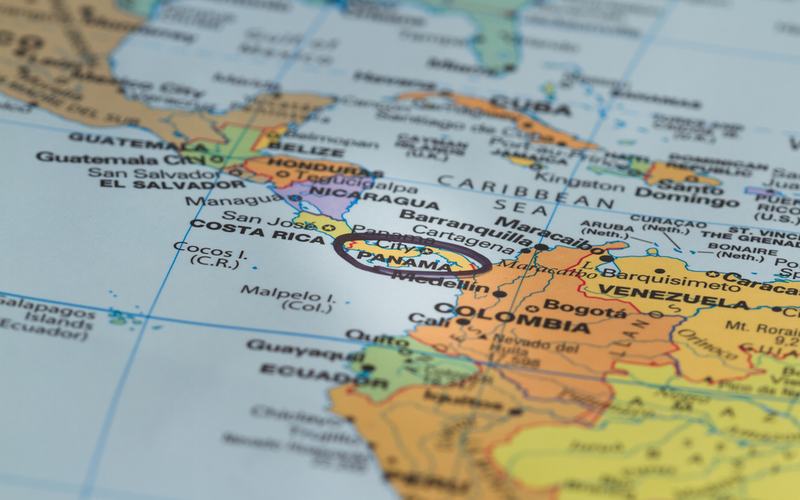
A magnitude 7.6 earthquake struck near the southern coast of Panama on Friday, shaking buildings in the capital and prompting evacuations while generating tsunami warnings across parts of Central America and beyond.
The U.S. Geological Survey reported the quake at a preliminary magnitude of 7.6, centered about 10 kilometers southwest of the remote community of Pitaloza Arriba in Herrera province. It occurred at a shallow depth of roughly 10 to 12.6 kilometers around 1:56 p.m. Eastern time. Some initial reports listed it as high as 7.7 or even 8.0 before revisions.
Residents in Panama City, more than 100 miles northeast of the epicenter, felt strong shaking that caused buildings to sway and led people to rush into the streets. Videos on social media showed evacuations from offices and homes. One witness from Herrera province described the jolt as very strong, noting that items fell in the kitchen and that locals were scared but uninjured so far.
Tsunami warnings were issued for the Pacific coasts of Panama, Colombia, Ecuador, Costa Rica, Nicaragua, Guatemala, and other nations. The U.S. Tsunami Warning System indicated possible hazardous waves in the coming hours, with potential heights of 1 to 3 meters in some areas.
Panama's civil protection authorities reported damage concentrated in the central provinces of Veraguas, Herrera, and Los Santos. The education ministry ordered schools closed nationwide as a precaution. No immediate reports of fatalities or major injuries emerged, though assessments continue.
The Panama Canal Authority confirmed operations remained normal, underscoring the waterway's resilience amid the seismic activity. Panama lies along the Pacific Ring of Fire, where tectonic plate boundaries frequently generate earthquakes.
President José Raúl Mulino urged calm and directed government ministers to monitor and respond to the situation. Aftershocks followed the main event, including notable ones shortly after the initial tremor.
This event adds to a year of significant seismic activity in Latin America, though Panama itself has experienced relatively fewer major quakes in recent decades compared to its neighbors. Officials continue to evaluate impacts as more data becomes available.

Comments
No comments yet. Be the first to share your thoughts.