
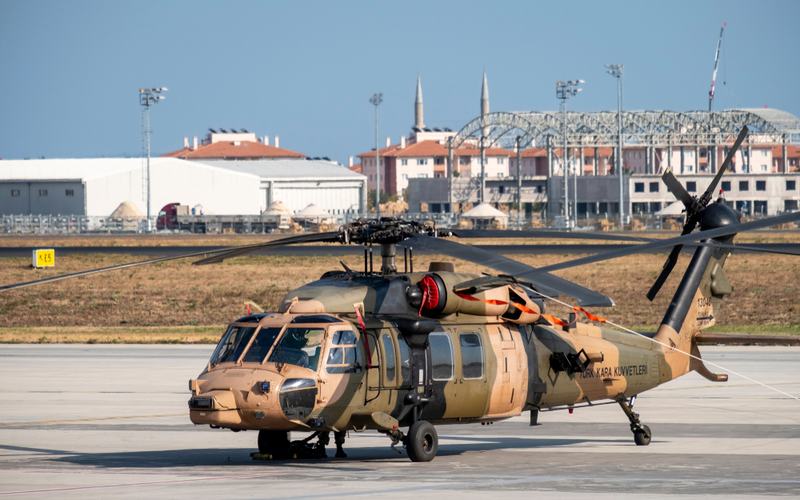
The U.S. Army identified multiple systemic failures that contributed to last year's deadly midair collision between an American Airlines passenger jet and an Army Black Hawk helicopter near Washington, D.C., according to a military report completed in May.
The collision occurred on Jan. 29, 2025, when American Airlines Flight 5342, carrying passengers from Wichita, Kansas, collided with the Black Hawk while approaching Ronald Reagan Washington National Airport. All 67 people aboard the two aircraft were killed, making it the deadliest U.S. aviation disaster in more than two decades.
The Army has not publicly released its report, but copies were provided to many of the victims' families after months of pressure for the findings to be made public. The Associated Press obtained a copy of the report, while the Army did not immediately comment on its contents.
The military investigation largely reinforces findings from the National Transportation Safety Board, which conducted a broader investigation into the crash. The NTSB focused heavily on years of warning signs and failures within the Federal Aviation Administration's oversight and air traffic control system.
The Army report nevertheless acknowledged that the military also bore responsibility for contributing factors. The lieutenant general who conducted the review concluded that "breakdowns across all layers of conflict management caused this accident," while identifying two failed radio transmissions as the most significant contributing factor.
Those communications problems prevented the helicopter crew from properly identifying Flight 5342 as it circled toward the airport's alternate runway. The Army pilots were also wearing night-vision goggles, which can restrict peripheral vision and make it more difficult to distinguish aircraft against the lights of an urban environment.
The report recommended that the Army examine helicopter operations beyond the Washington area, including major metropolitan regions where military aircraft regularly operate. An Army official said reviews of helicopter operations around Los Angeles and the Seattle-Tacoma region are already underway.
The findings have also renewed calls from victims' families for Congress to require stronger collision-avoidance technology on aircraft. The Families of Flight 5342, representing passengers aboard the American Airlines jet, said the Army and NTSB investigations demonstrate the need for systems that allow aircraft to identify nearby traffic in the air.
Congress has already taken steps toward aviation safety reforms, with the House and Senate each passing separate legislation. Lawmakers are now working to reconcile the two bills before bringing a final measure to both chambers for consideration.
The Army's recommendations are intended to address failures identified in the military's own operations while broader aviation reforms remain under consideration in Congress.

Comments
No comments yet. Be the first to share your thoughts.