
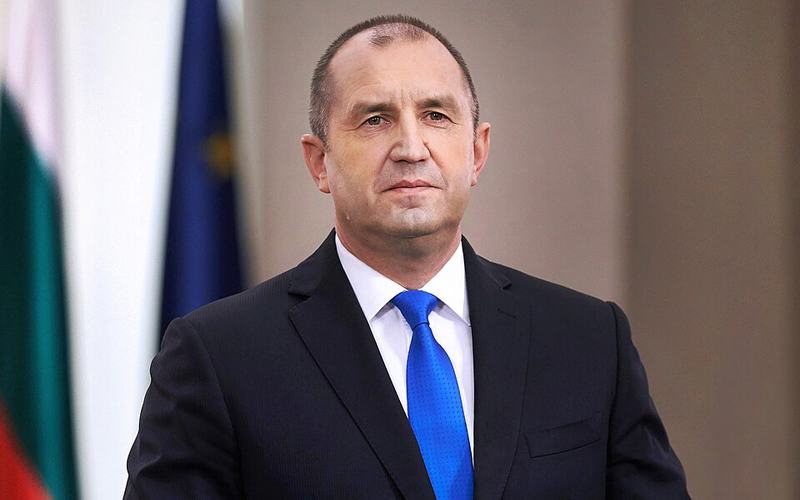
Bulgarian Prime Minister Rumen Radev defended President Donald Trump’s diesel agreement with Russian President Vladimir Putin on Thursday, breaking with European Union leaders who argue that easing sanctions on Russian fuel could help fund Moscow’s war against Ukraine.
Speaking ahead of a two-day European Council summit in Brussels, Radev said Europe’s high fuel prices are undermining economic competitiveness and argued that additional energy supplies could help ease the pressure on businesses and consumers.
“Any step in reducing fuel prices and to guarantee our competitiveness, we appreciate,” Radev told reporters.
The Trump-Putin agreement temporarily eases U.S. sanctions on Russian diesel imports through April 2027, potentially allowing additional Russian fuel supplies despite Western efforts to economically isolate Moscow following its invasion of Ukraine.
Radev’s support put him at odds with several European leaders. Swedish Prime Minister Ulf Kristersson criticized the arrangement, arguing that measures that increase Russia’s ability to finance its military campaign send the wrong message. EU foreign policy chief Kaja Kallas also condemned the agreement, describing it as a gift to Putin and questioning what concessions Washington had obtained in return.
The Bulgarian leader also opposed Ukrainian attacks on Russian oil refineries, which Trump has urged Ukrainian President Volodymyr Zelenskyy to halt. Radev argued that strikes against energy infrastructure on either side could drive up fuel prices across Europe.
“I don’t support strikes on any refineries,” he said.
Radev’s position comes as Bulgaria faces growing security concerns in the Black Sea. Drone attacks struck two commercial vessels near the country’s coastline this week, prompting the prime minister to seek assistance from NATO and the European Union. Although responsibility for the attacks had not been confirmed, Radev said the incidents appeared to benefit Russian interests and condemned them as “absolutely unacceptable.”
Bulgaria occupies a strategically sensitive position as a NATO member bordering a region increasingly affected by the war in Ukraine and the conflict involving Iran. The country has also permitted U.S. military aircraft involved in the Iran war to use its air bases, a decision Radev defended by emphasizing the importance of the American security partnership.
“The United States is our principal ally in the field of security,” Radev said. Trump publicly thanked the Bulgarian leader in July for supporting the deployment of American aircraft despite Iranian threats.
Radev’s approach reflects his broader preference for negotiations with Moscow over an expanded military and economic campaign against Russia. Earlier this year, he described Trump as the “voice of wisdom” in addressing the war during an appearance at the Munich Security Conference.
Since becoming prime minister after Bulgaria’s parliamentary election earlier this year, Radev has opposed additional Bulgarian military assistance to Ukraine and withdrawn the country from the British- and French-led Coalition of the Willing, which was established to coordinate support for Kyiv.
At a defense summit in September, Radev warned that attempting to defeat Russia through sustained military pressure could lead to dangerous escalation, including a potential nuclear confrontation. He argued that weapons deliveries alone would not determine the eventual outcome of the conflict.
“There is a limit to just delivering weapons and supporting, because the final peace set-up will be done by diplomacy, not by delivering weapons,” he said.
Radev has rejected accusations that his government is pro-Russian, maintaining that European leaders should pursue practical diplomatic solutions rather than rely exclusively on sanctions and military assistance. His defense of Trump’s diesel agreement underscores the growing divide between European leaders who favor maintaining economic pressure on Moscow and those who argue that energy affordability and renewed diplomacy must also factor into Western policy.
“We have not exhausted the power of diplomacy,” Radev said.

Comments
No comments yet. Be the first to share your thoughts.