
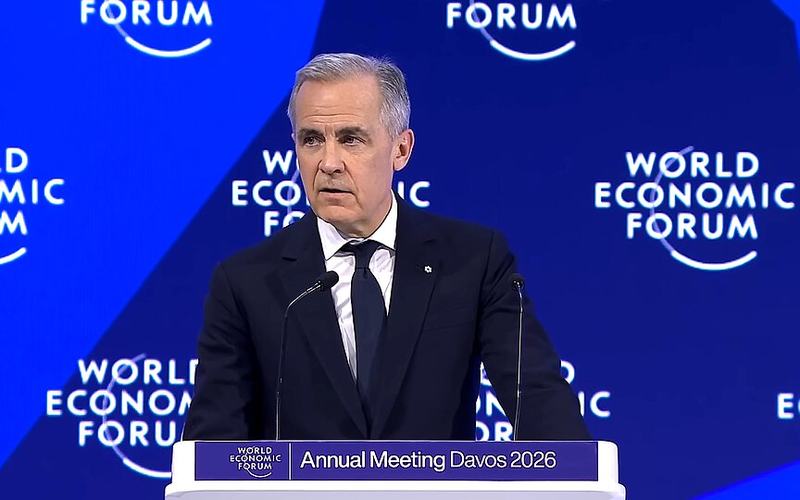
Canadian Prime Minister Mark Carney warned Thursday that outside forces are seeking to weaken Canada so they can gain control over the resource-rich nation, using a rally in Calgary to urge Alberta voters to reject a proposal that could eventually lead to a referendum on independence.
“This referendum comes at the worst possible time,” Carney told a large pro-Canada rally, according to the Associated Press. “The world has become more dangerous and divided. Some outside our borders are working to break us so they can own us.”
Carney did not explicitly identify the United States or Trump in that statement, but the remarks came amid an increasingly tense relationship between the two countries. Trump has repeatedly threatened to make Canada the 51st U.S. state and criticized its trade policies, while his administration's trade dispute with Ottawa has added pressure to the longstanding economic partnership.
The Alberta vote is not a direct referendum on independence. Instead, voters will decide whether the provincial government should begin the legal process toward a potential future separation referendum. Alberta holds the world's fourth-largest proven oil reserves, making the province a significant player in Canada's energy industry.
Carney urged voters not to treat the ballot as a symbolic protest against the federal government, warning that a vote supporting the separation process could create years of uncertainty and division.
“Don’t be fooled by the idea you can ‘send a message’ with your vote,” Carney said. “This is not poker. A vote against Canada is a dangerous bluff that will lead to years of deep division and great uncertainty.”
The prime minister has argued that Canada must become more economically resilient and reduce its dependence on the United States. His government has pursued that position as trade tensions with Washington have intensified, despite the deep commercial ties between the neighboring countries.
Carney's warnings come as Canada's economy faces mounting pressure. The country lost 110,000 jobs across its two most recent monthly employment reports, while the unemployment rate rose to 6.5%, adding to concerns about the economic outlook.
The former central banker, who succeeded Justin Trudeau as prime minister after being selected to lead the Liberal Party, has made reducing Canada's reliance on the United States a central part of his approach to the relationship with Washington.
Carney previously declared that there would be “no turning back” from his effort to reduce Canada's economic dependence on its southern neighbor, arguing that the country's national interests required a significant shift in its economic strategy.
The Alberta independence debate presents a challenge for Carney as he attempts to maintain national unity while responding to economic frustration and growing tensions with Washington. Alberta's oil wealth and long-running disagreements with the federal government over energy and economic policy have made the province a focal point in the broader debate over Canada's future.
While Thursday's ballot will not itself separate Alberta from Canada, a vote to begin the legal process could set the stage for a more consequential political battle. Carney is urging voters to reject that path, warning that the prospect of separation would leave the province and the country facing prolonged uncertainty at a time of heightened international and economic pressure.

Comments
No comments yet. Be the first to share your thoughts.