
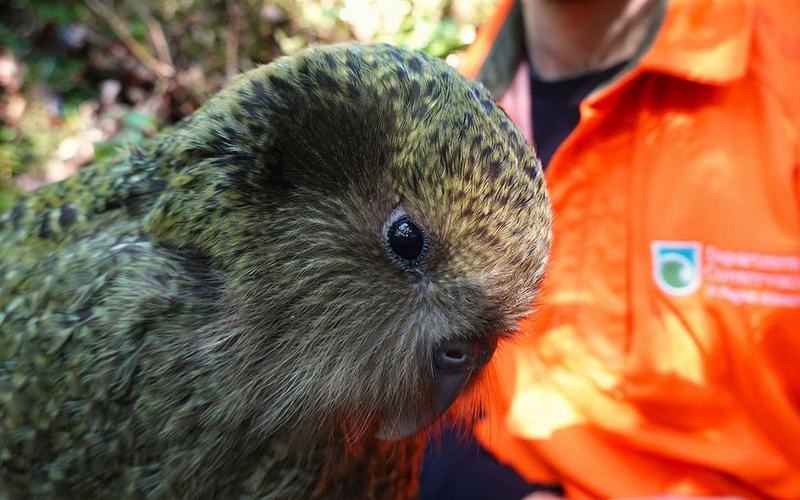
A once near-extinct New Zealand bird is making a major come back. The kākāpō, the world's only flightless parrot, has reached a major conservation milestone. The official population climbed to 325 birds after a record-breaking breeding season produced 90 surviving chicks, the New Zealand Department of Conservation announced this week.
The kākāpō is a heavy ground-dwelling parrot endemic to New Zealand. Similar to the extinct dodo bird, the kākāpō was once widespread and came from a predator-free environment. Much like the dodo bird, they were nearly driven to extinction after excessive hunting and non-native predators such as stoats, cats, and rats were introduced into the region.
The new total marks the highest number recorded since the modern recovery program began and is believed to be the first time the population has exceeded 300 birds in around 75 years. “It’s fantastic to finally see the population increase after all that time,” said Deidre Vercoe, Kākāpō Recovery Operations Manager, in a press release. “It’s also a significant milestone for the species. Ninety chicks in a single season is a record. In the early years of recovery, it took 16 years to produce that many chicks.”
The 2026 season was triggered by an exceptionally abundant fruiting of trees on the birds’ predator-free island sanctuaries. Seventy-nine females nested, laying 258 eggs. Of the 106 chicks that hatched, 90 survived to be considered independent adults.
The Kākāpō Recovery Program launched in 1995 with just 51 known birds, including only 20 females. Intensive efforts in the decades since and collaborations between island locals and conservationists have steadily rebuilt numbers through the predator-free island sanctuaries, individual tracking of every bird, supplementary feeding, nest management, artificial incubation and genetic management.
The recovery program is intent to begin gradually reducing intensive intervention as the population grows, with a small number of this year’s chicks remaining unnamed for the first time in modern history as a symbolic step toward a more natural future for the species. From a perilous low of 51 birds to hundreds today, the kākāpō’s recovery stands as one of the world’s most carefully managed conservation successes. The kākāpō is still classified as Nationally Critical, but the growing population makes conservationists hopeful.
Longer-term goals for the kākāpō include expanding predator-free areas and New Zealand’s broader Predator Free 2050 goal of eradicating the most harmful invasive predators from the country.

Comments
No comments yet. Be the first to share your thoughts.