
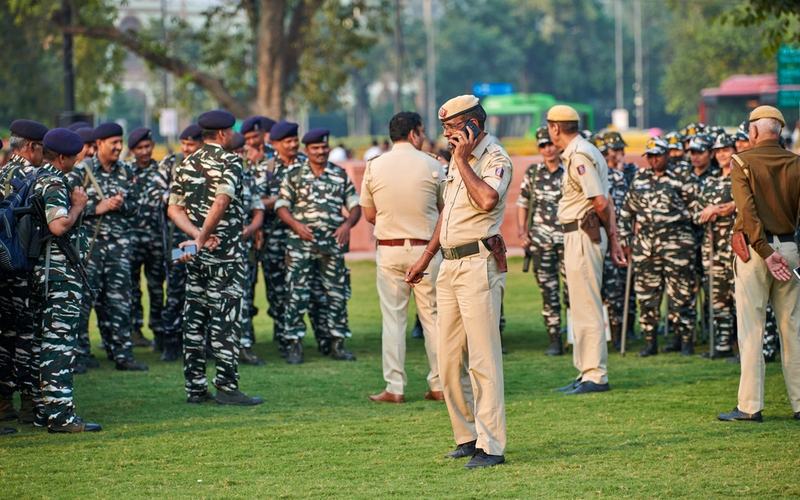
Indian authorities enforced an unprecedented security lockdown across New Delhi on Saturday to prevent a planned demonstration by the Cockroach Janta Party and allied groups at Jantar Mantar. The protest sought the resignation of Chief Election Commissioner Gyanesh Kumar over allegations of voter list manipulation during a special intensive revision of electoral rolls.
Delhi Police denied permission for the gathering, citing insufficient advance notice and concerns over public order. In response, officials mobilized between 20,000 and 30,000 police and paramilitary personnel. They erected extensive barricades, imposed Section 163 restrictions prohibiting unlawful assemblies, and conducted preventive detentions.
Reports indicated that thousands of individuals were detained throughout the day, including at borders, railway stations, and in central areas. Many were transported to temporary holding sites in buses and vans. No major violence occurred, with police exercising restraint.
Transit disruptions were widespread. Entry and exit gates at 45 Delhi Metro stations remained closed for much of the day, affecting key interchanges. Hundreds of trains scheduled for New Delhi and Hazrat Nizamuddin stations were cancelled. Mobile internet services faced suspension in central Delhi zones for approximately 24 hours.
The measures extended to intensified checks at city borders, airports, and sensitive locations. Commercial activity in parts of Connaught Place and nearby areas was curtailed. Union Home Ministry coordination with states helped limit influxes of potential demonstrators.
Critics, including opposition figures, described the response as excessive. Supporters viewed it as a necessary step to safeguard critical infrastructure and maintain stability amid efforts to challenge electoral processes.
The lockdown transformed central Delhi into a controlled zone, with flag marches and heightened surveillance ensuring compliance.

Comments
No comments yet. Be the first to share your thoughts.