
Democrats' renewed push for universal healthcare is already moving away from the sweeping single-payer system long promoted by progressive lawmakers, as concerns over federal spending, private insurance, and political resistance complicate efforts to enact Medicare for All.
The Wall Street Journal reported that Democratic candidates and elected officials are increasingly favoring narrower proposals, including a Medicare buy-in and a government-backed public option, rather than replacing most private coverage with a federally administered system.
A survey by the liberal Progressive Change Institute found that among 65 Democratic congressional candidates who won battleground races, 22% campaigned on Medicare for All, 15% supported allowing people to buy into Medicare and 57% favored a public option that would operate alongside private insurance.
The financial burden of a nationwide single-payer system remains one of the largest obstacles. Dr. Ezekiel Emanuel, a healthcare policy expert who helped develop the Affordable Care Act, told the Journal that shifting the nation's healthcare spending into the federal budget would pose a major challenge.
“Healthcare is a $6 trillion industry,” Emanuel said. He described moving that spending under federal control as “a major, major barrier.”
The political landscape presents another challenge for Democrats, particularly with President Donald Trump retaining veto power over legislation. Trump, however, said Tuesday he intends to meet with Michigan Sen.-elect Abdul El-Sayed to discuss possible areas of agreement on healthcare reform.
“He's a smart guy,” Trump told the New York Post. “Maybe there's some place in the middle that we could go.”
El-Sayed, who made Medicare for All a central part of his campaign, has attempted to appeal to Trump by promoting a universal healthcare proposal he calls “TrumpCare for All.” He has circulated mock-ups of a gold healthcare card bearing Trump's name as part of the effort.
His approach differs from the single-payer plan proposed by Sen. Bernie Sanders of Vermont, which would prohibit private insurers from selling coverage that duplicates government benefits. El-Sayed instead supports maintaining employer-sponsored and other private insurance while providing universal government-backed coverage.
“It's not about what you take away,” El-Sayed told the Journal. “It's about what you offer.”
Trump has indicated he is open to negotiating with Democrats but would not accept their proposals without changes. Speaking at the White House last week, he said a healthcare agreement could combine elements from both parties.
“Now, can it be what they want? No, but it can be a combination of what we all want,” Trump said.
Republicans have long opposed Medicare for All, warning that the proposal would require major tax increases or additional federal borrowing, place financial pressure on hospitals and healthcare providers, and potentially limit patients' access to services. Sen. Rick Scott of Florida said El-Sayed's proposal would “destroy the Medicare program.”
Sanders is urging Democrats to use budget reconciliation to begin a four-year transition toward single-payer healthcare. His proposed initial steps would lower Medicare's eligibility age to 55, cover all children and add dental, vision and hearing benefits.
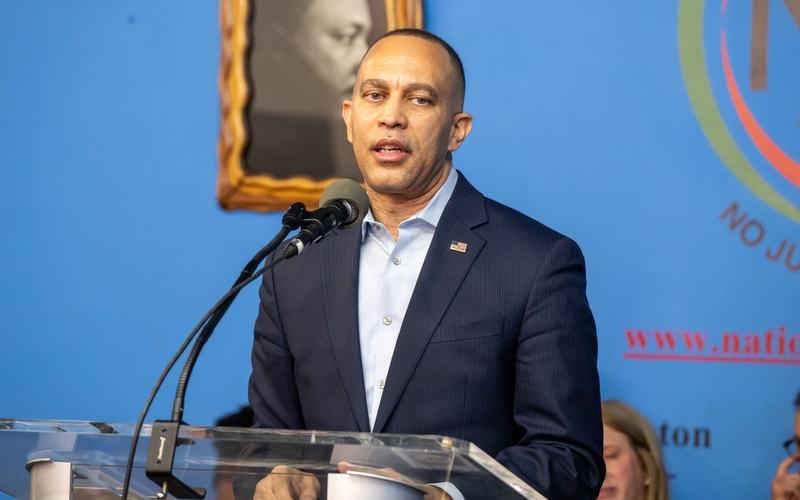
House Democratic leader Hakeem Jeffries of New York, who previously opposed Sanders' Medicare for All proposal, has endorsed some of the initial expansions but has not specified how far he would lower the eligibility age.
Sen. Elissa Slotkin of Michigan also supports expanding Medicare's benefits and said she was “willing to consider” changing the program's eligibility requirements.
Even more limited expansions could significantly increase federal spending. The Congressional Budget Office estimated in 2022 that lowering Medicare's eligibility age to 60 would add $155 billion to federal deficits over six years, assuming the change began in 2026.
Business groups have also raised concerns about proposals that preserve private insurance but introduce a government-run competitor. They warn that a public option could weaken employer-sponsored coverage and increase premiums in the private market.
“Americans want more healthcare, not higher taxes, fewer choices, and government control over their coverage,” Lexi Branson, the U.S. Chamber of Commerce's vice president for health policy, told the Journal.

Comments
No comments yet. Be the first to share your thoughts.