
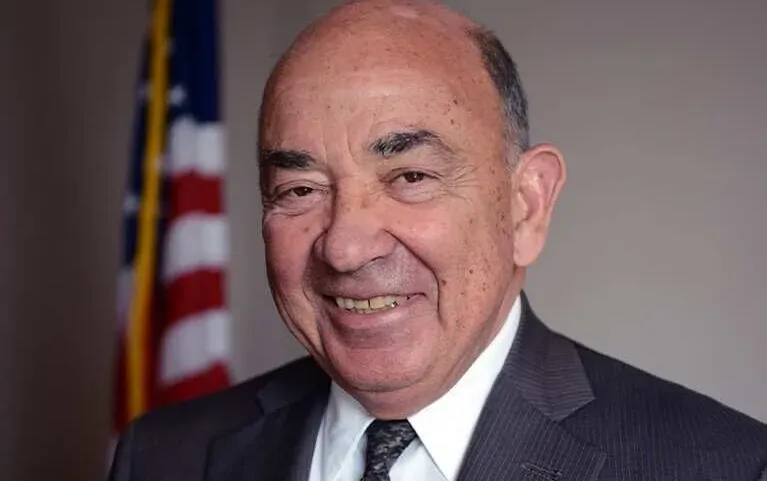
Alvin K. Hellerstein, a longtime federal judge in Manhattan who presided over major cases involving President Donald Trump, former Venezuelan President Nicolás Maduro, and the September 11 terrorist attacks, has died at age 92.
Chief Judge Laura Taylor Swain announced Hellerstein’s death Wednesday, praising his commitment to the court. “His energetic and dedicated service to this Court continued until his death,” Swain said, adding that he would be greatly appreciated and sorely missed.
President Bill Clinton, a Democrat, appointed Hellerstein to the federal bench in 1998. He maintained an active caseload throughout his career and continued working until his death, including overseeing several politically significant cases in recent years.
Just two weeks before his death, Hellerstein presided over the arraignment of Maduro and his wife, Cilia Flores, on torture charges added to their existing narco-terrorism conspiracy case. Maduro twice declined to enter a plea when asked by the judge, prompting Hellerstein to direct that a not-guilty plea be entered on his behalf.
At Flores’ October 8 bail hearing, Hellerstein acknowledged that he was having difficulty speaking but continued with the proceedings. He had scheduled the couple’s trial for June and had indicated that he intended to preside over the case.
Hellerstein also repeatedly rejected Trump’s efforts to move the president’s New York state hush-money case into federal court and have his conviction dismissed on presidential immunity grounds. In August, the judge denied Trump’s request for a third time.
The latest ruling followed an order from the 2nd U.S. Circuit Court of Appeals directing Hellerstein to reconsider his earlier decision. The appeals court said he had failed to address important issues relevant to Trump’s request but did not direct him to reach a particular conclusion.
The dispute followed Trump’s March 2023 indictment and his May 2024 conviction, as well as a Supreme Court ruling establishing immunity for presidents and former presidents from prosecution for official acts. Trump’s legal team argued that the immunity decision supported moving the case to federal court.
In another consequential ruling involving Trump’s former attorney Michael Cohen, Hellerstein ordered Cohen released from prison in 2020 after the Justice Department revoked his home confinement. Cohen had sought to publish a book and speak to the media, and Hellerstein concluded that the government’s actions were retaliatory and violated Cohen’s First Amendment rights.
Hellerstein’s legacy also included years of litigation stemming from the September 11, 2001, terrorist attacks on the World Trade Center. He oversaw dozens of wrongful-death, personal-injury and property-damage lawsuits involving victims, survivors and families.
Lawyers said Hellerstein showed considerable empathy toward victims and their relatives, meeting with them for extended periods in his chambers and challenging settlement offers he considered inadequate.
In March 2010, he rejected a proposed settlement worth at least $575 million for thousands of people who became ill after working in the toxic debris left by the attacks. Hellerstein acknowledged that his direct involvement in evaluating the settlement was unusual but argued that the circumstances demanded special attention.
“Most settlements are private. A plaintiff and defendant come together, shake hands, and it’s done with,” he said. “This is different. This is 9/11.”
His handling of the aftermath was not without controversy. In 2008, Hellerstein ended an effort to compel New York City officials to continue searching for human remains in debris transported from Ground Zero to a Staten Island landfill.
Other major cases before Hellerstein included the prosecution of Charlie Javice, who was convicted of defrauding JPMorgan Chase of $175 million by exaggerating the customer base of her financial-aid startup, and the trial of hedge fund founder Bill Hwang, convicted in 2024 of securities and market-manipulation fraud in a scheme that cost banks billions of dollars.
In 2025, Hellerstein presided over a civil trial in which a jury ordered French bank BNP Paribas to pay nearly $21 million over its role in providing Sudan’s government access to the U.S. financial system while the regime was engaged in atrocities two decades earlier.
He also drew attention in 2015 when he ordered a New York City cable company to pay a Texas woman $229,500 after it flooded her phone with 153 unwanted automated calls.
Known for his independent streak and strict courtroom discipline, Hellerstein maintained practices that set him apart from other judges. He continued requiring spectators to wear masks for more than two years after the height of the COVID-19 pandemic, even after other judges had abandoned the requirement.
Hellerstein became a senior federal judge in 2011. Before his judicial appointment, he served in the U.S. Army Judge Advocate General’s Corps and worked as a litigator in Manhattan.

Comments
No comments yet. Be the first to share your thoughts.