
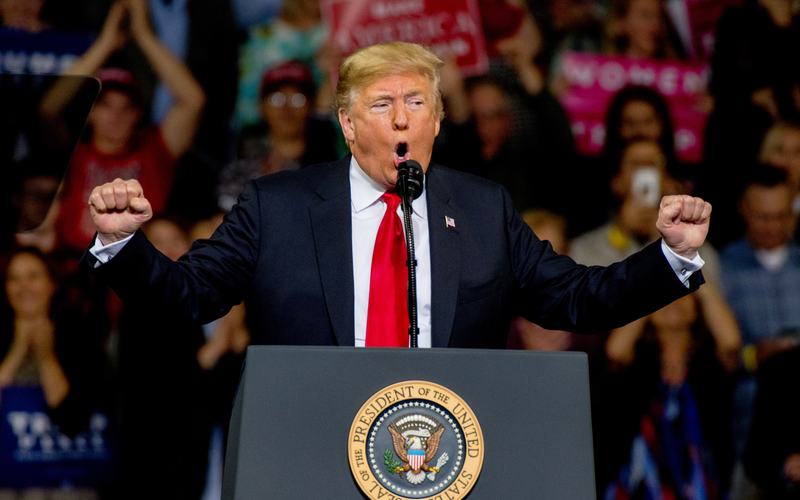
The U.S. House of Representatives on Thursday narrowly rejected a Democratic-led war powers resolution aimed at curbing President Donald Trump's authority to conduct military operations against Iran.
Lawmakers voted 213-214 against the measure introduced by Rep. Gregory Meeks, D-N.Y., the ranking Democrat on the House Foreign Affairs Committee. The resolution would have directed the president to terminate hostilities with Iran unless Congress explicitly authorized further action. Rep. Thomas Massie, R-Ky., was the only Republican to vote in favor, while Rep. Jared Golden, D-Maine, joined Republicans in opposition. Rep. Warren Davidson, R-Ohio, voted present.
The vote followed a similar rejection in the Senate on Wednesday, where Republicans blocked the measure 47-52, marking the fourth such failure this year. House Majority Whip Tom Emmer, R-Minn., defended the president's approach, calling the military operation "the most successful" given the scope of the threat from Iran to U.S. interests and the region. "I believe we will be rewarded for the president's efforts," Emmer said.
Rep. Meeks argued the conflict constitutes a full-scale war, not a limited operation. "This is not a skirmish. This is not a military operation. This is a war," he said on the House floor. He warned that continued blockage of the Strait of Hormuz amid a fragile ceasefire risks escalation with no clear exit strategy.
Rep. Golden explained his no vote by noting the current ceasefire and ongoing negotiations. "The United States and Iran are currently in a ceasefire, and we are negotiating over critical questions of national security," he said. "A resolution like this would weaken our hand."
The U.S. military campaign against Iran, now approaching its eighth week, began with strikes on Iranian nuclear sites and has involved air operations and a naval blockade of key Iranian ports. A two-week ceasefire is in place, but the Strait of Hormuz remains partially blocked, contributing to rising energy prices. President Trump stated on Monday that the conflict is "very close to over," as the administration considers a second round of peace talks.
Democrats have pushed multiple war powers resolutions since the conflict's outset, viewing it as an unauthorized expansion of executive power. Republicans have consistently opposed the measures, arguing they undermine U.S. leverage during delicate negotiations and ongoing operations involving thousands of service members. Earlier attempts in March also failed, with the House voting 212-219 and 219-212 against similar bills.
House Foreign Affairs Committee Chair Brian Mast, R-Fla., criticized the Democratic push as misguided, saying it would recklessly remove U.S. forces during the ceasefire. The rejections hand President Trump broad latitude as diplomatic efforts continue amid heightened regional tensions.

Comments
No comments yet. Be the first to share your thoughts.