
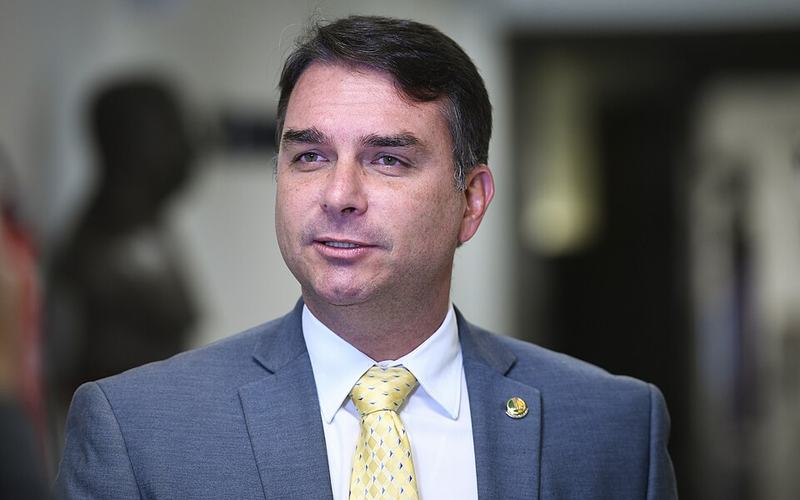
Flávio Bolsonaro has pulled off a major political reversal in Brazil, finishing the first round of the presidential election ahead of incumbent left-wing President Luiz Inácio Lula da Silva.
Bolsonaro entered the race trailing Lula in polling, but steadily gained ground as the campaign progressed. He ultimately received roughly 47% of the vote to Lula’s 45%, forcing the two candidates into an Oct. 25 runoff.
The result represents a striking reversal in a race that had initially been more favorable to Lula. The president held a comfortable lead earlier in the campaign, but that advantage steadily disappeared as Bolsonaro gained support. Reuters reported just days before the election that Lula’s early lead had evaporated, with most surveys showing the two candidates effectively tied in potential runoff matchups.
That late surge makes the result particularly notable in the context of American politics. Bolsonaro is an ally of President Donald Trump, and the Brazilian senator’s comeback bears similarities to Trump’s 2024 campaign, when Trump returned to the presidency after losing the 2020 election and defeating Vice President Kamala Harris after a campaign in which the race remained highly competitive.
Flávio Bolsonaro is also carrying forward the political movement built by his father, former President Jair Bolsonaro. The elder Bolsonaro narrowly lost to Lula in 2022 and was later convicted over a plot to overturn the election result. He remains barred from seeking office, making his son the family’s leading candidate for a return to power.
The younger Bolsonaro has positioned himself as a continuation of his father’s conservative movement while emphasizing crime, economic concerns, and closer relations with the United States. His ties to Trump have also become an important part of Brazil’s election, particularly as Lula’s government has clashed with the Trump administration over tariffs and other issues.
Bolsonaro’s first-round performance also comes as conservative and right-wing candidates have gained ground across Latin America in recent elections. The result in Brazil gives the region’s political right another major opening in one of the world’s largest democracies and Latin America’s largest economy.
Still, Bolsonaro has not won the presidency. He must now defeat Lula in the Oct. 25 runoff, where the candidates will compete for the voters who backed the other contenders in the first round.
The runoff will determine whether Brazil becomes another major Latin American country to move toward the right or remains under Lula and the left-wing Workers’ Party.

Comments
No comments yet. Be the first to share your thoughts.