
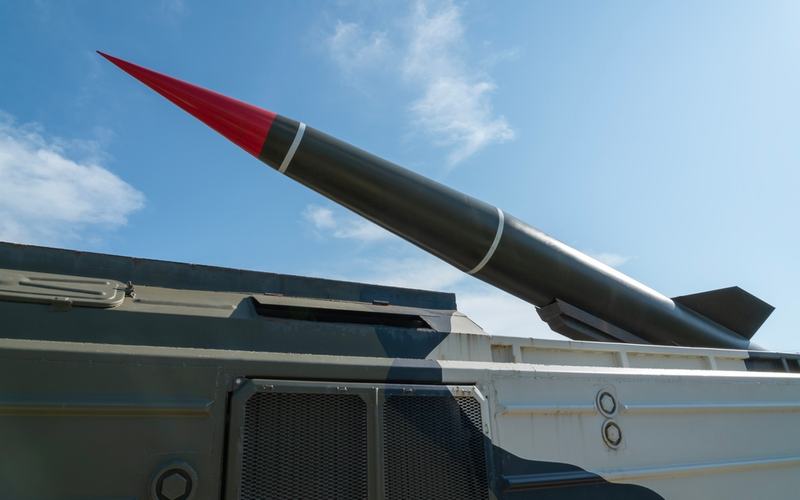
Iran is producing approximately 50 ballistic missiles each month and retains an estimated stockpile of 1,700 despite months of U.S. and Israeli airstrikes that have severely damaged its military infrastructure, according to a Western intelligence assessment reported by Bloomberg.
The intelligence assessment indicates Iran's missile production has fallen to roughly half its prewar capacity. However, Tehran has retained enough components and manufacturing capability to continue assembling weapons, leaving it with a potential retaliatory arsenal if military operations resume.
A Western official cited by Bloomberg said Iran's conventional military has been largely destroyed by the joint U.S.-Israeli campaign launched February 28. Despite those losses, the country's remaining missiles and drones could still threaten American forces and regional targets.
War Secretary Pete Hegseth highlighted the damage to Iran's military infrastructure Tuesday, declaring that more than 80% of the country's nuclear industrial base had been destroyed.
Iran's Islamic Revolutionary Guard Corps has nevertheless sought to demonstrate that its missile capabilities remain operational. The force recently unveiled what Iranian media described as a new underground “missile city” containing ballistic and cruise missiles, along with launching systems. The facility's location and the number of weapons stored there have not been disclosed.
Gen. Ali Abdollahi, Iran's armed forces chief of staff, warned that the country would have additional capabilities to reveal in a future conflict, saying that “surprises in a future war will be revealed one after the other.”
Iran may also retain thousands of Shahed-type attack drones, according to Jim Lamson, a former CIA analyst and visiting research fellow at King's College London. Bloomberg Economics estimates Tehran has launched more than 4,900 Shahed drones and at least 2,200 ballistic missiles since the conflict began in late February.
The sustained attacks have also placed significant demands on American missile defenses. The United States has used at least 1,000 Patriot PAC-3 interceptors, which cost approximately $4 million apiece and are manufactured at an estimated annual rate of 650. Washington nevertheless retains substantial inventories of precision-guided bombs, Tomahawk cruise missiles and other advanced weapons.
President Donald Trump said Monday that the war was “militarily effectively over” and suggested Iran was interested in negotiating an agreement. The U.S. blockade remains in place, however, maintaining economic pressure on Tehran as Iranian officials continue threatening commercial shipping.
Iranian security official Mohsen Rezaei warned Wednesday that any additional American strikes would prompt retaliation against U.S. bases. He also rejected surrendering Iran's enriched uranium, according to The Times of Israel.
Analysts have cautioned that Iran does not need to match American military capabilities to remain a threat. Becca Wasser, Bloomberg Economics' defense lead, said Tehran's strategy relies on retaining enough military power to disrupt operations, impose costs and withstand further attacks.
The assessment suggests that, despite extensive damage to Iran's military infrastructure, its remaining missile and drone capabilities could complicate any renewed U.S. or Israeli campaign.

Comments
No comments yet. Be the first to share your thoughts.