
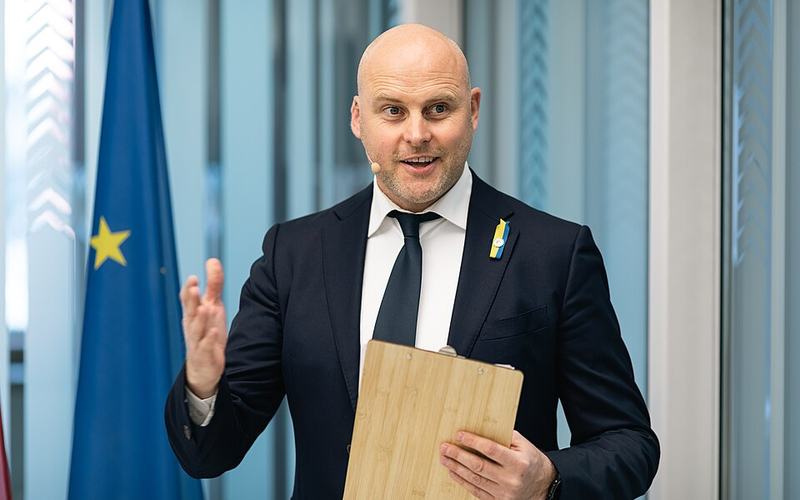
Latvia’s United List won 42 of the 100 seats in parliament, emerging as the largest political force in Saturday’s election and giving Prime Minister Andris Kulbergs a strong mandate to begin negotiations for a new governing coalition.
Kulbergs, who leads the centrist United List, became prime minister in May after a political crisis brought down the previous coalition. His government has strongly supported Ukraine in its war against Russia, a position that has taken on added importance as Latvia faces growing concerns about Russian aggression.
The election was held after the previous government collapsed following a dispute over its handling of Ukrainian drones suspected of entering Latvian airspace. Parliament subsequently backed Kulbergs and his coalition, which had previously been in opposition.
Latvia is a NATO and European Union member located on the alliance’s eastern flank. The country shares borders with both Russia and Moscow-aligned Belarus, making national security and the war in neighboring Ukraine major concerns for Latvian voters.
The United List received about 35% of the vote, but its 42 seats fall short of the 51 needed for a parliamentary majority. Kulbergs will therefore have to negotiate with other parties to assemble a governing coalition.
Several other parties cleared the 5% threshold required to win seats in the 100-member Saeima, leaving Kulbergs with multiple potential coalition partners but also a fragmented parliament.
More than half of eligible voters participated in the election, with turnout exceeding 51%. The lawmakers elected Saturday will serve four-year terms.
Kulbergs now faces the task of forming a coalition capable of governing while maintaining Latvia’s strong support for Ukraine and addressing security concerns along the country’s border with Russia and Belarus.

Comments
No comments yet. Be the first to share your thoughts.