
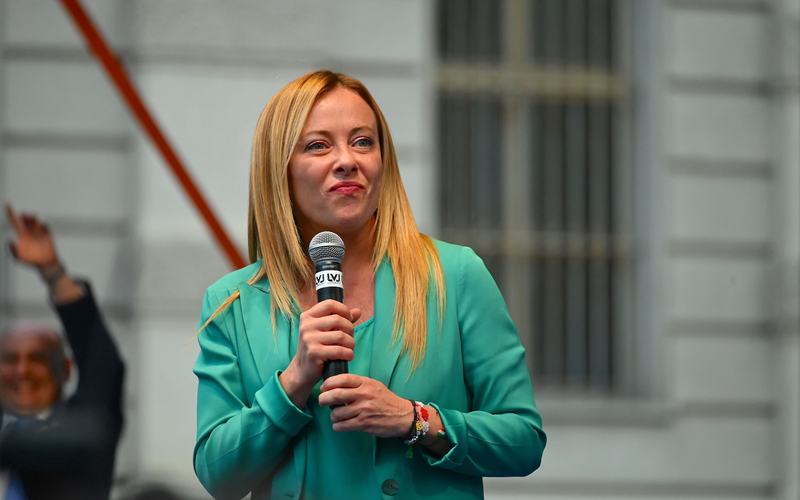
Italian Prime Minister Giorgia Meloni pushed back against U.S. President Donald Trump's threat to withdraw American troops from Italy, stating she would not back such a move.
Meloni made the remarks Monday in Yerevan, Armenia, during a European Political Community summit. "It is a decision that doesn't depend on me and one that I personally would not agree with," she said. The statement came days after Trump indicated he would "probably" pull troops from Italy and Spain.
Trump made the comments on Thursday in response to questions about NATO allies' support during the ongoing U.S. war with Iran. "Yeah, I probably will," he said. "Why shouldn't I? Italy has not been of any help to us, and Spain has been horrible. Absolutely horrible." As of December 2025, the U.S. had about 12,662 active-duty personnel stationed in Italy, primarily at bases including Naval Air Station Sigonella in Sicily.
The tensions trace back to late March, when Italy denied U.S. military aircraft permission to land at Sigonella before heading to the Middle East with weapons for operations against Iran. Italian officials cited a failure by Washington to consult Rome as required under bilateral agreements. Italy's Defense Minister Guido Crosetto defended the decision, stating Italy is not at war with Iran and has offered to help protect shipping in the Strait of Hormuz.
Trump has escalated criticism of Meloni, once a close ally, accusing her of lacking courage for refusing to join U.S. attacks on Iran. In an April interview with Corriere della Sera, he said, "I’m shocked at her. I thought she had courage, but I was wrong." The rift deepened after Meloni condemned Trump's remarks about Pope Leo XIV as "unacceptable," prompting Trump to call her stance on Iran equally unacceptable.
Crosetto responded to the troop threat by saying he "wouldn't understand the reasons behind it," noting Italy's offers of assistance were appreciated by U.S. forces. U.S. Secretary of State Marco Rubio plans to visit Rome this week for talks, including with Meloni and the Pope.
Trump's warnings extend to other NATO members like Germany and Spain, which also restricted U.S. access to bases amid the Iran conflict. He has argued that the U.S. protected Europe during the Ukraine war but received no reciprocal help. No troop movements have been announced, but the dispute highlights strains in transatlantic relations over burden-sharing.

Comments
No comments yet. Be the first to share your thoughts.