
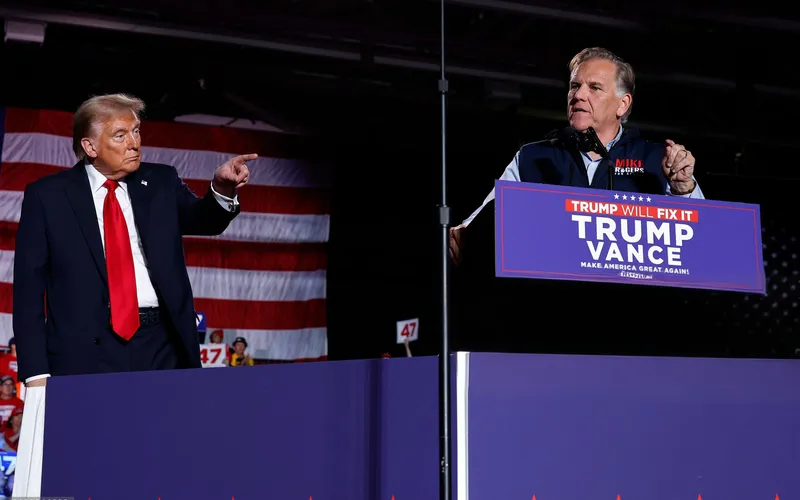
Michigan Senate candidates Abdul El-Sayed and Mike Rogers apparently continued their back-and-forth during a commercial break in Thursday’s debate, with moderator Rick Albin telling viewers the exchange was unusual when the program resumed.
“Welcome back to everyone watching across the country and News Nation, and we welcome the candidates back,” Albin said after the break. He then addressed what had happened off-air.
Abdul’s bought off by the Soros family, big corporations, Chuck Schumer, and registered terrorist organizations.
— Mike Rogers (@MikeRogersForMI) October 9, 2026
We can’t let this conman anywhere near the Senate. pic.twitter.com/wjEnwjwO0e
“I wanna take a quick aside and tell you that in 30 years of doing debates, I’ve never seen it continue during the commercial, but it did. Let’s get right to our next question,” Albin said, according to WLNS.
The exchange came as Michigan voters prepare for the November midterm elections, with the Senate race shaping up as a closely watched contest between the Democratic and Republican candidates.
Rogers also took aim at El-Sayed in a social media post Thursday evening, accusing his Democratic opponent of having ties to wealthy political donors, major corporations, Senate Minority Leader Chuck Schumer, and organizations Rogers described as terrorist-linked.
“Abdul’s bought off by the Soros family, big corporations, Chuck Schumer, and registered terrorist organizations. We can’t let this conman anywhere near the Senate,” Rogers wrote.
Those allegations reflect Rogers’ criticism of El-Sayed’s political alliances and ideological positions. They remain claims made by the Republican candidate, rather than established findings in the information provided.
El-Sayed has said he is “not a socialist,” but his campaign has received support from prominent progressive lawmakers, including independent Sen. Bernie Sanders of Vermont, Rep. Alexandria Ocasio-Cortez of New York and Rep. Rashida Tlaib of Michigan. He has also campaigned with left-wing political streamer Hasan Piker, who previously drew criticism for saying America “deserved 9/11.”
Separately, a counterterrorism expert raised concerns about El-Sayed’s candidacy during an August Senate Judiciary Subcommittee hearing on Muslim Brotherhood threats in the United States. According to the account provided, the expert cited alleged family ties to groups linked to the Muslim Brotherhood and connections to a Midwest voter-engagement organization the expert said was associated with the Council on American-Islamic Relations, or CAIR.
The allegations and criticisms have become part of the broader political dispute surrounding El-Sayed’s campaign as he and Rogers compete for Michigan’s Senate seat.

Comments
No comments yet. Be the first to share your thoughts.