
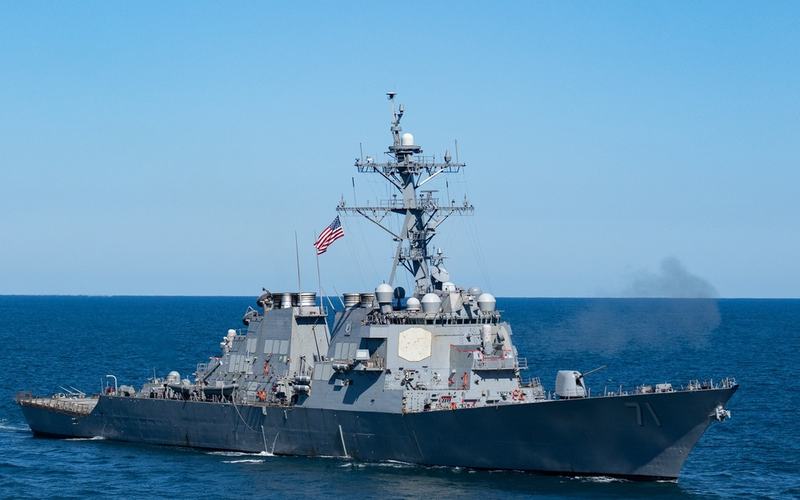
Families of approximately 7,000 service members assigned to the USS George H.W. Bush Carrier Strike Group were told Monday that their loved ones would not return home for Thanksgiving or Christmas as the Navy continues its operations against Iran. Acting Navy Secretary Hung Cao warned that ending the mission prematurely could allow Tehran to develop enough cruise missiles and drones to overwhelm American defenses and eventually become a nuclear-armed state.
Cao delivered the warning during a Nov. 9 meeting with approximately 500 family members at Naval Station Norfolk in Virginia. Audio of the meeting, reviewed by MS NOW, revealed that Navy officials informed relatives the deployment had been extended for a second time and that they should prepare for a worst-case scenario of a yearlong mission.
"I know you're wondering, 'Why are we out there? Why are we doing this stuff?'" Cao told the families. He described the conflict as part of a decades-long struggle with Iran and said the carrier strike group had helped protect approximately 3,000 ships from attacks.
Cao argued that U.S. intelligence indicated Iran's military capabilities could become increasingly difficult to contain if Washington did not act. He said that within a year, Iran could possess so many cruise missiles and drones that American forces would be unable to penetrate its defenses, leaving the country as a nuclear-armed power.
The carrier strike group departed Norfolk on March 31 for what was initially expected to be a standard six- to seven-month deployment. It arrived in the Middle East in April to relieve the USS Gerald R. Ford and has since supported American operations connected to the war and naval blockade of Iran.
The latest extension has created frustration among military families, some of whom questioned the length of the deployment, the strain on sailors and the lack of clear communication from Navy leadership. Officials warned relatives to prepare for a possible 12-month deployment, which would keep service members away from home into next spring.
Cao acknowledged the hardship of the extended mission, telling families he understood what it was like when children asked when their parents would return. He defended the administration's decision as necessary to prevent Iran from developing a more dangerous arsenal.
Navy leaders have also indicated that the deployment's end depends on developments in the conflict. Cao said the condition for bringing the strike group home was for Iran to agree to remain a non-nuclear state.

Comments
No comments yet. Be the first to share your thoughts.