
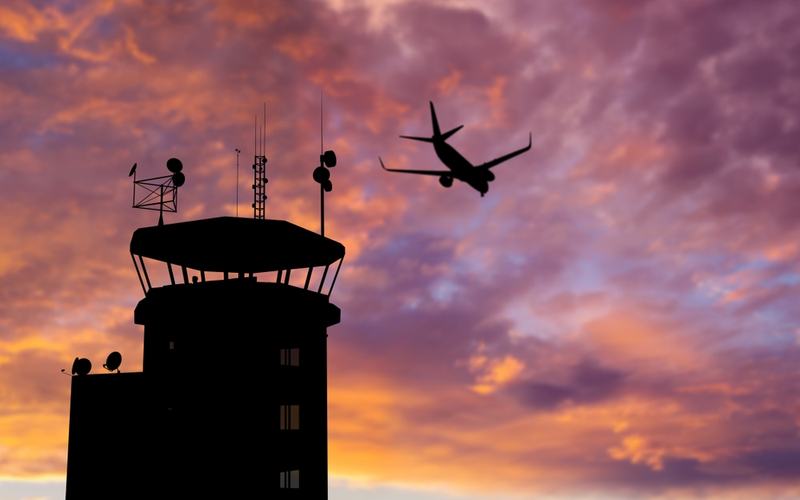
A network update reportedly caused a crash in the private communications system connecting the nation's air traffic control network, triggering a nationwide Federal Aviation Administration (FAA) ground stop Friday, November 13. The reported failure affected all 22 regional Air Route Traffic Control Centers, disrupting communications across the country's aviation system and forcing airports nationwide to halt departing flights.
Multiple sources said the network update caused the system to reboot before the failure resulted in a widespread outage. The communications breakdown left air traffic control facilities unable to operate normally, prompting the FAA to suspend departures across the United States while officials worked to address the problem. However, federal officials have not publicly confirmed that the network update caused the outage, and the precise circumstances surrounding the failure remain under investigation.
The affected communications system is operated by defense contractor L3Harris, which provides technology and infrastructure supporting the nation's air traffic control operations. The company had not immediately responded to a request for comment regarding the reported network update and subsequent outage.
The disruption prompted the FAA to issue a rare nationwide ground stop, citing "extraordinary circumstances and for reasons of safety." The order halted departing flights at airports across the country as the agency worked to determine the extent of the communications failure and restore normal operations.
Transportation Secretary Sean Duffy said the issue affected all 22 regional Air Route Traffic Control Centers, which direct aircraft traveling between airports nationwide. The facilities play a central role in coordinating aircraft movements through the nation's airspace, making the communications failure a widespread disruption rather than an isolated airport or regional problem.
Homeland Security Secretary Markwayne Mullin described the incident as a telecommunications outage and said officials had not found evidence of a deliberate attack. Asked about the possibility of malicious interference, Mullin said there was "no indication, as of yet" that the outage was a "nefarious act."
The reported network update has become a focus of questions surrounding the incident, particularly because the failure affected the communications infrastructure used by the country's air traffic control centers. Investigators will need to determine whether the update directly triggered the system crash, whether another technical problem contributed to the outage, or whether the timing of the two events was coincidental.
More than 4,000 flights were canceled amid the disruption, while passengers faced widespread delays and uncertainty over when normal air travel would resume. The ground stop also affected college football programs and professional sports teams attempting to reach destinations for weekend games, with NBA, NHL and NFL travel plans facing potential complications.
In an update shortly after 6 p.m. ET, the FAA said the nationwide ground stop remained in effect but announced that flights would be allowed to depart through coordination with the Air Traffic Control System Command Center as en route facilities recovered. The change permitted some departures to resume under centralized coordination, although the agency had not declared the ground stop fully lifted.
The FAA had not publicly confirmed the reported network update as the cause of the communications failure. L3Harris also had not immediately commented on the incident, leaving the specific technical cause of the nationwide disruption unresolved.

Comments
No comments yet. Be the first to share your thoughts.