
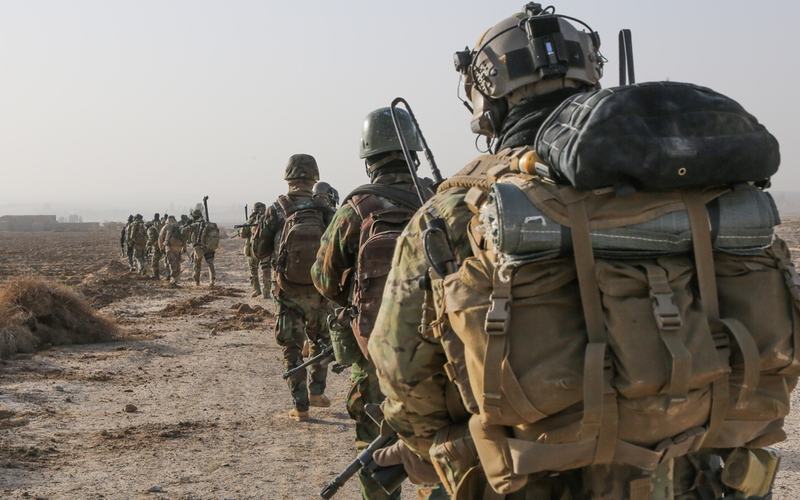
The Pentagon announced Friday that the United States will withdraw approximately 5,000 troops from Germany over the next six to 12 months, fulfilling a threat by President Donald Trump amid escalating tensions with German Chancellor Friedrich Merz.
Defense Secretary Pete Hegseth ordered the drawdown following a review of U.S. force posture in Europe, according to Pentagon spokesman Sean Parnell. The move affects about 14% of the roughly 36,000 active-duty U.S. service members stationed in Germany as of late 2025, leaving more than 30,000 troops there. Germany hosts key installations, including the U.S. European Command and Africa Command headquarters at Stuttgart, Ramstein Air Base, and the Landstuhl Regional Medical Center.
The decision stems from a public dispute over the U.S. war with Iran, which began in late February 2026 with U.S.-Israeli strikes. Merz criticized the American approach during a school visit earlier this week, stating the U.S. was being "humiliated" by Iranian negotiators and lacked a clear strategy. "The Iranians are obviously very skilled at negotiating, or rather, very skillful at not negotiating," Merz said. Trump responded on social media that Merz "doesn't know what he's talking about" and should focus on ending Russia's war in Ukraine and fixing Germany's problems.
Parnell said the withdrawal recognizes "theater requirements and conditions on the ground," with some units, like a brigade combat team and a long-range fires battalion, impacted. Troops may return to the U.S. before potential redeployment to priorities such as the Indo-Pacific. The Landstuhl hospital, which treats wounded personnel, will not be affected.
Germany's Defense Minister Boris Pistorius called the move "foreseeable" and emphasized Europe's need to bolster its own security. "We are on the right track," he said. Merz maintained that his relationship with Trump remains good despite the exchange. Democrats in Congress criticized the action, with Senate Armed Services Committee Ranking Member Jack Reed calling it "reckless" and warning of damage to alliances.
The announcement revives Trump's long-standing complaints about NATO allies' defense spending and burden-sharing. During his first term, he ordered a similar reduction of about 12,000 troops from Germany, but President Joe Biden halted it in 2021. Trump has also threatened cuts in Italy and Spain for limited support in the Iran conflict, where NATO members have offered only indirect aid like base access.
U.S. troop levels in Europe surged after Russia's 2022 invasion of Ukraine, but recent adjustments have reversed some increases. Analysts note that the presence in Germany aids deterrence against Russia and power projection to the Middle East and Africa.

Comments
No comments yet. Be the first to share your thoughts.