
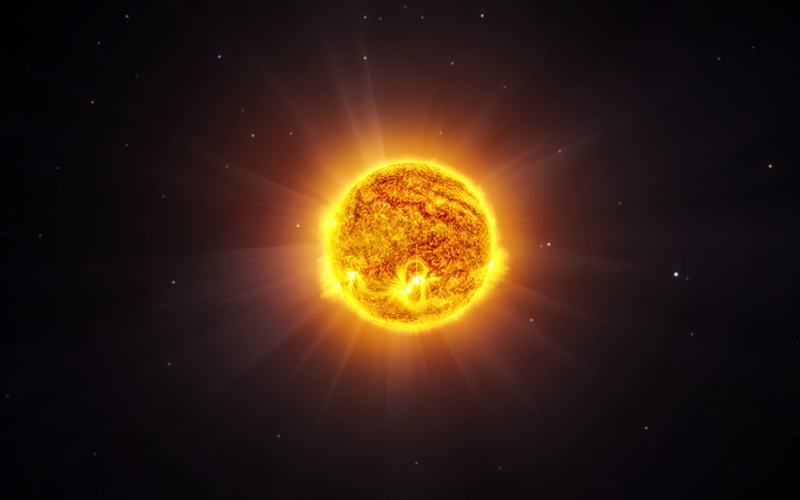
A powerful M6.86 solar flare has triggered a radio blackout and sent coronal mass ejections (CMEs) toward Earth, raising concerns about possible geomagnetic disturbances over the coming days.
Solar flares are sudden bursts of energy released from the Sun that can disrupt radio communications, particularly on the side of Earth facing the eruption. Coronal mass ejections are enormous clouds of magnetized plasma expelled into space. When directed toward Earth, they can interact with the planet's magnetic field and trigger geomagnetic storms.
The potential effects depend on the speed, direction and magnetic orientation of the incoming material. Stronger geomagnetic storms can disrupt high-frequency radio communications, affect satellite operations and navigation systems, and create additional stress on electrical power grids. They can also produce auroras that may be visible farther from the poles than usual.
However, the arrival of a CME does not automatically mean a major geomagnetic storm will occur. The severity depends on how the ejected material interacts with Earth's magnetic field, and forecasts can change as scientists gather more information.
Space-weather officials monitor solar eruptions and incoming CMEs to assess potential impacts on communications, satellites and infrastructure. The actual risk will depend on the strength and timing of any resulting geomagnetic activity.

Comments
No comments yet. Be the first to share your thoughts.